
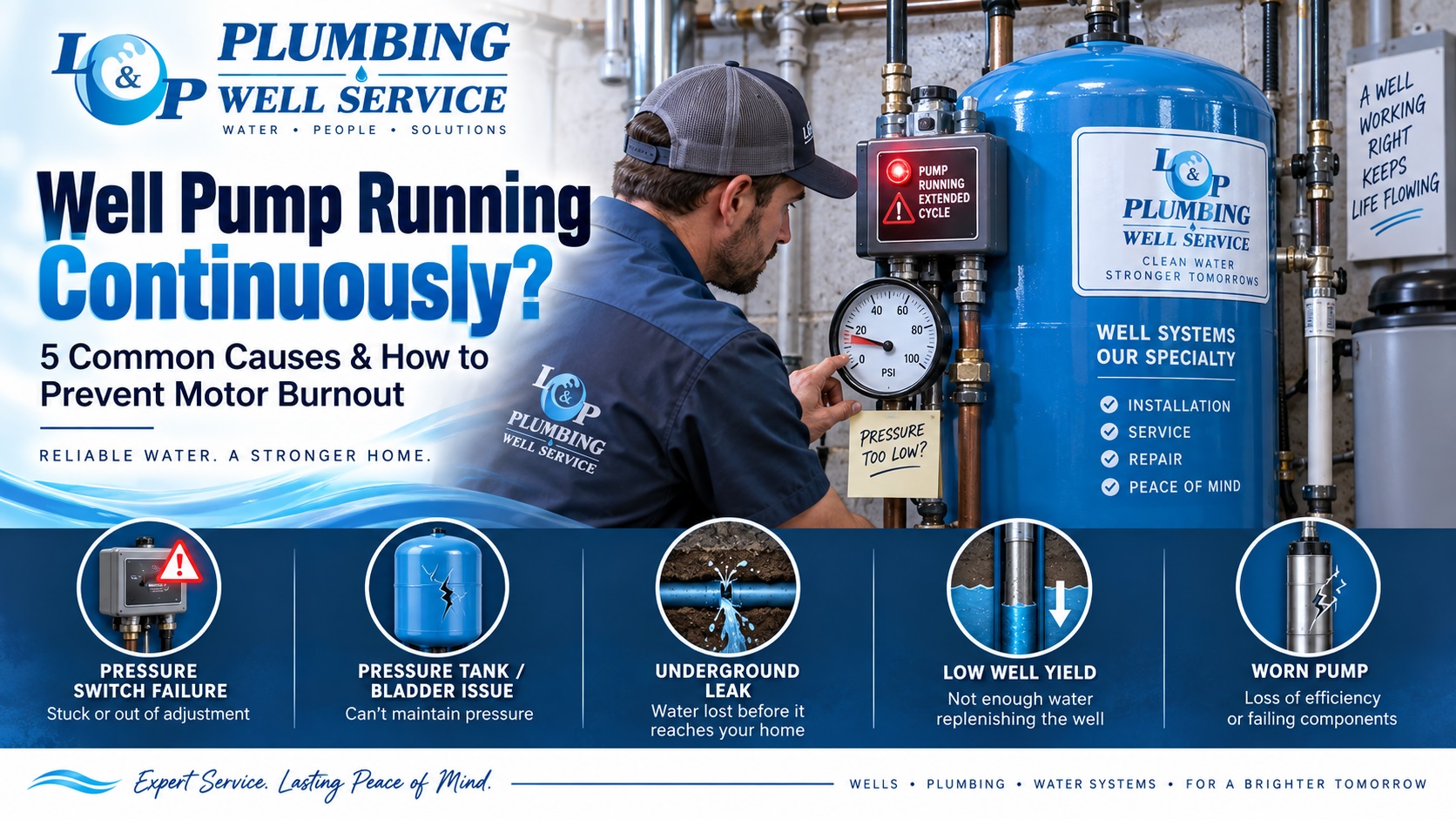
A well pump running continuously usually means the system cannot reach the pressure needed for the pressure switch to shut the pump off. Common causes include a failed pressure switch, leaking underground water line, low well yield, worn submersible pump, or pressure tank problem. Continuous operation should not be ignored because a pump that runs without building pressure can overheat, increase electric bills, and eventually suffer motor failure.
At L&P Plumbing & Well Service, we recommend shutting the system down and scheduling diagnosis when the pump runs constantly with little or no water pressure. Our Watertown team services pumps, pressure tanks, switches, wiring, and complete private well systems throughout Litchfield County and nearby Connecticut communities.
The National Ground Water Association also warns that pumps can suffer serious damage when a well cannot supply enough water and the pump continues operating under dry or low-flow conditions.
Is Continuous Running the Same as Short Cycling?
No.
A continuously running pump stays on because the system never reaches its shutoff pressure.
Well pressure tank short cycling is the opposite pattern. The pump turns on and off repeatedly, sometimes every few seconds.
Both conditions can shorten pump life.
A healthy traditional well system normally allows the pump to build pressure, shut down, and let the pressure tank provide stored water until pressure reaches the pump’s cut-in point.
1. The Pressure Switch Is Failing
The pressure switch tells the pump when to start and stop.
A common residential setup may start the pump around 40 PSI and stop it around 60 PSI. If the contacts stick, the sensing passage becomes clogged, or the switch is damaged, the pump may fail to shut off correctly.
Warning signs can include:
- Pump running after all faucets are closed
- Pressure gauge stuck below cut-out pressure
- Clicking or buzzing near the switch
- Burned or damaged electrical contacts
- Sudden changes in household pressure
Pressure switches carry live electrical voltage, so we recommend professional testing rather than opening or adjusting one without proper training.
2. An Underground Water Line or Drop Pipe Is Leaking
A hidden leak can make the pump work continuously because water escapes before the system reaches full pressure.
Leaks can develop in:
- Underground lines between the well and house
- Drop pipe inside the well
- Pipe fittings
- Check valves
- Plumbing inside the home
- Outdoor hydrants or irrigation lines
One clue is a pump that runs even when nobody is using water.
Wet ground near the well line, unexplained water pressure loss, or a sudden electric bill increase can also point toward a leak.
Our well pump repair service in Watertown, CT includes diagnosis of water lines, pressure controls, pumps, tanks, and related system components.
3. The Well Is Not Producing Water Fast Enough
Sometimes the pump itself is working, but the well cannot replenish water quickly enough.
Low well yield can become more noticeable during:
- Dry summer periods
- Heavy household water demand
- Irrigation use
- Multiple showers or appliances operating together
- Changes in groundwater conditions
When the pumping water level falls near or below the pump intake, the pump may continue operating without delivering enough water.
This condition deserves fast attention because insufficient water flow around a submersible pump can increase the risk of overheating and motor damage.
4. The Submersible Pump Is Wearing Out
A worn pump may still move water but no longer produce enough pressure to reach the switch’s cut-out setting.
Homeowners may notice:
- Weak shower pressure
- Pump running for unusually long periods
- Pressure that never reaches normal levels
- Air sputtering from fixtures
- Increasing electric bills
- Intermittent water
- Eventually, no water from the well
Submersible well pumps commonly last around 10 to 15 years, although actual service life depends on water quality, cycling frequency, sediment, system sizing, and maintenance.
When an older pump repeatedly loses pressure or requires repairs, submersible well pump replacement in CT may make more financial sense than continuing to repair a failing motor.
Our well pump replacement service covers submersible pumps, jet pumps, pressure components, wiring, and complete system testing.
5. The Pressure Tank or Bladder Is Failing
Pressure tank problems are especially associated with short cycling, but they can also contribute to an unstable well system.
A bladder tank contains compressed air that helps store pressurized water. If the bladder ruptures or the tank loses its proper air charge, the pump may start much more frequently.
Watch for:
- Pump cycling every few seconds
- Pressure rising and falling rapidly
- Water coming from the tank’s air valve
- Tank failing to hold an air charge
- Pressure surges at faucets
The National Ground Water Association identifies malfunctioning pressure tanks and pressure switches as two common causes of excessive pump cycling.
Repeated motor starts create additional stress, so a bad tank should not be ignored simply because water still reaches the faucets.
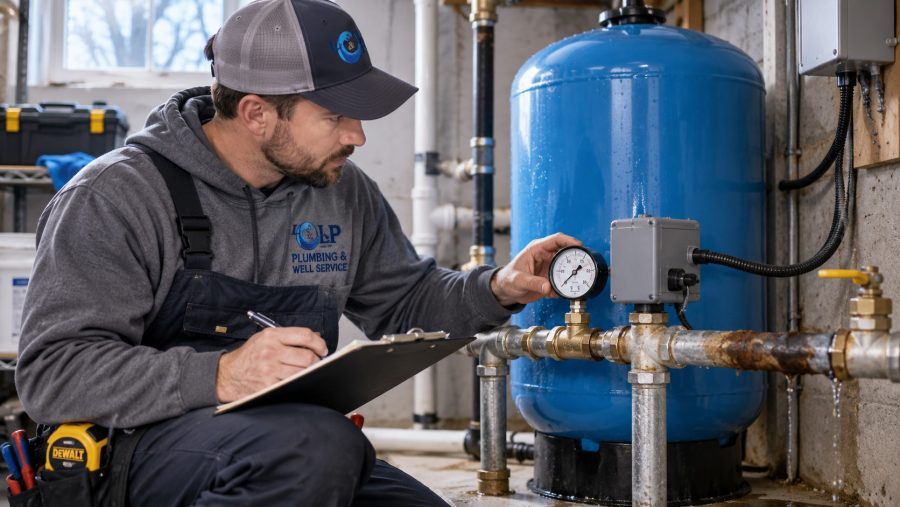
How to Prevent Well Pump Motor Burnout
We recommend paying attention to changes before the home reaches a complete no-water emergency.
Useful preventive steps include:
- Check unusual pressure changes promptly
- Investigate a sudden jump in electric use
- Repair leaking plumbing and underground lines
- Have the pressure tank and switch tested
- Avoid repeatedly resetting a tripped pump breaker
- Address short cycling immediately
- Test well yield when water supply repeatedly drops
- Replace an aging pump before repeated failures become emergencies
If the pump is running but producing little or no water, shutting it down can help prevent additional damage until the system is inspected.
Repair or Replace the Well Pump?
Replacement does not automatically make sense every time a pump runs continuously.
A relatively new pump may only need a pressure switch, pressure tank, wiring, check valve, or leak repair.
Replacement becomes more likely when the pump is approaching 10 to 15 years old, cannot produce adequate pressure, repeatedly fails, has a damaged motor, or no longer matches the home’s water demand.
We test the complete system before recommending replacement.
Restore Reliable Well Water Before the Pump Fails
A constantly running pump is the system asking for attention.
At L&P Plumbing & Well Service, we diagnose well pump running continuously, pressure tank problems, underground leaks, low well yield, short cycling, and no water from well emergencies in CT.
Early diagnosis can often turn a sudden pump failure into a planned repair instead of an unexpected loss of water.