
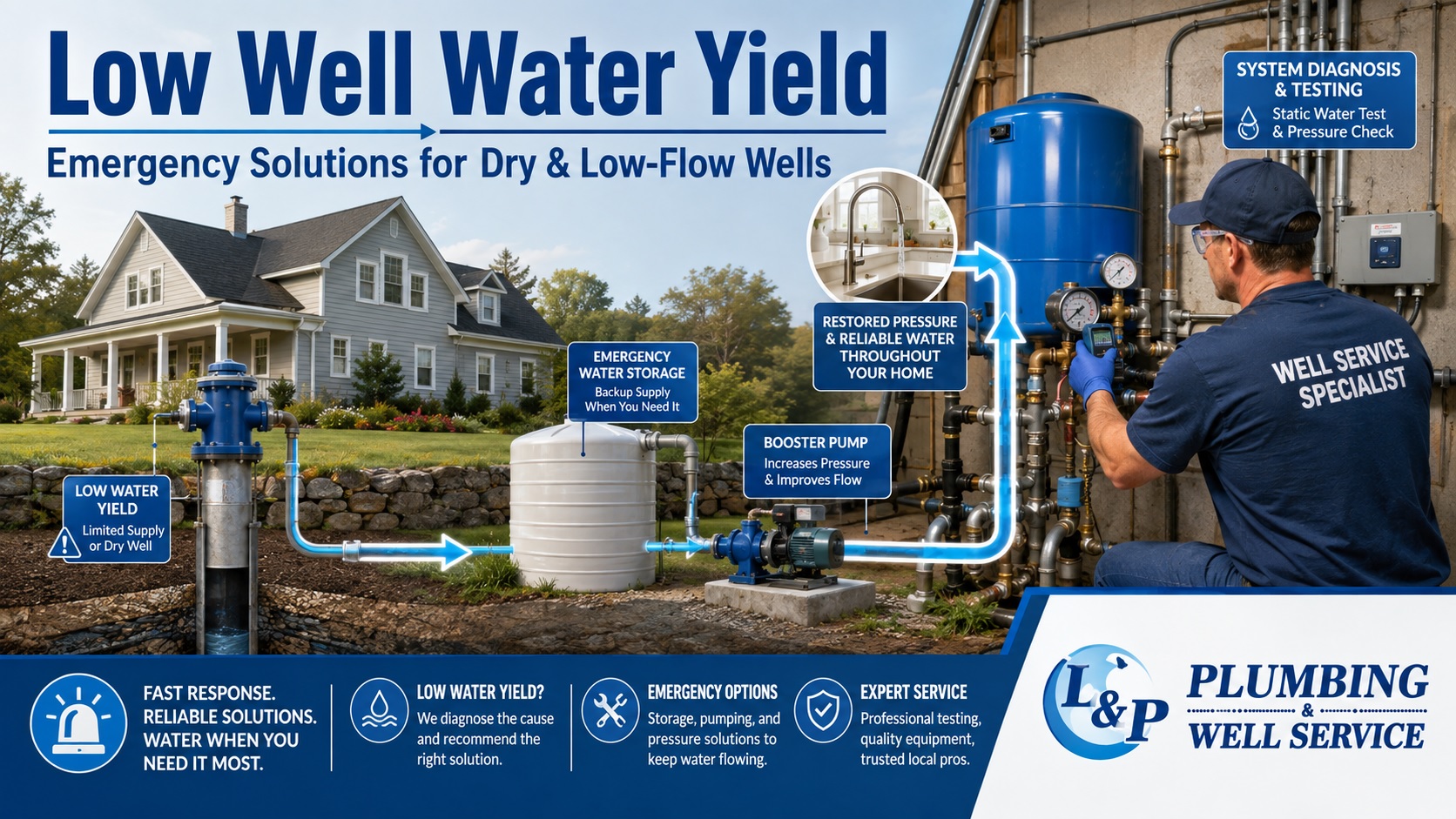
When a private well begins producing less water, the first step is determining whether the problem is actually low well yield or a failing pump, pressure tank, clogged filter, leaking line, or electrical component. At L&P Plumbing & Well Service, we recommend checking static water level, pumping water level, recovery rate, pump performance, and household demand before choosing a permanent solution. Connecticut guidance recognizes several options for low-producing wells, including deeper drilling, well rehabilitation, hydrofracturing, and additional above-ground water storage with a booster pump.
Well Running Out of Water Symptoms
A low-yield well does not always stop producing water completely.
Common well running out of water symptoms include:
- Faucets suddenly sputtering air
- Water pressure dropping during showers
- Water disappearing after laundry or multiple showers
- Pump running for unusually long periods
- Pump cycling more frequently
- Water returning after the well rests
- Problems becoming worse during summer or drought
- Sediment appearing after heavy water use
Connecticut DEEP specifically identifies frequent pump operation, temporary water outages, and air bubbles at faucets as possible signs that a well cannot keep pace with household demand.
Before assuming the aquifer has failed, our well pump repair service can help determine whether the problem comes from the water source or the equipment delivering that water.
Start With Static Water Level and Yield Testing
Understanding how to increase well water yield starts with measuring what the well currently produces.
Static water level is the depth at which water naturally stands inside the well when no water is being pumped and the level has reached equilibrium. Pumping water level measures how far that water level drops while the pump is operating. The difference helps reveal how aggressively household demand is drawing down the well.
A professional evaluation may look at:
Static water level: Water depth before pumping.
Pumping water level: Water depth while the system operates.
Yield: How many gallons per minute the well can continuously provide.
Recovery rate: How quickly water returns after pumping stops.
Connecticut DPH guidance recommends longer testing for especially low-yield wells because a short test may not accurately show sustainable production.
Emergency Step: Reduce Water Demand
When seasonal groundwater levels drop, protecting the available supply becomes the immediate priority.
We recommend temporarily staggering high-demand activities instead of running several at once.
Avoid combining:
- Laundry
- Dishwasher cycles
- Long showers
- Outdoor watering
- Pool filling
- Multiple high-flow fixtures
Giving a slow-producing well more recovery time can prevent the pump from repeatedly drawing the water level below its usable range.
If the home suddenly has no water at all, our related guide explains how to troubleshoot a no-water well system before major repairs are considered.
Option 1: Deepen the Existing Well
Drilling deeper is one possible solution when the existing well does not provide enough storage or access to productive water-bearing fractures.
Additional depth can increase the amount of water stored inside the borehole. Connecticut DPH notes that a six-inch well holds approximately 1.5 gallons per foot of water column.
However, deeper does not automatically mean greater groundwater yield.
The goal is either to intercept additional water-bearing fractures or increase usable storage. Additional depth can also affect pump horsepower, wire length, drop pipe requirements, and installation cost.
Option 2: Hydrofracture the Well
Hydrofracturing uses high-pressure water inside a drilled bedrock well to open or improve existing fractures that carry groundwater.
For certain Connecticut bedrock wells, this can increase the amount of groundwater entering the borehole. Connecticut DPH recognizes hydrofracturing as a possible rehabilitation method for wells experiencing reduced yield.
It is not guaranteed to work.
The state’s drought guidance notes that hydrofracturing may improve yield but can also be ineffective and may affect neighboring wells. A licensed well contractor should evaluate whether the geology makes the process appropriate.
What Affects Hydrofracturing Well Cost?
Hydrofracturing well cost varies considerably according to:
- Well depth
- Number of zones treated
- Existing casing condition
- Equipment access
- Local permit requirements
- Testing requirements
- Well construction
- Whether pump removal or replacement is necessary
Rather than selecting hydrofracturing based only on price, we recommend comparing its expected benefit with deepening the existing well, drilling another well, or adding storage.
Option 3: Add a Bulk Water Storage Tank and Booster Pump
A low-producing well does not necessarily need to deliver household peak demand directly.
Sometimes the better solution is storage.
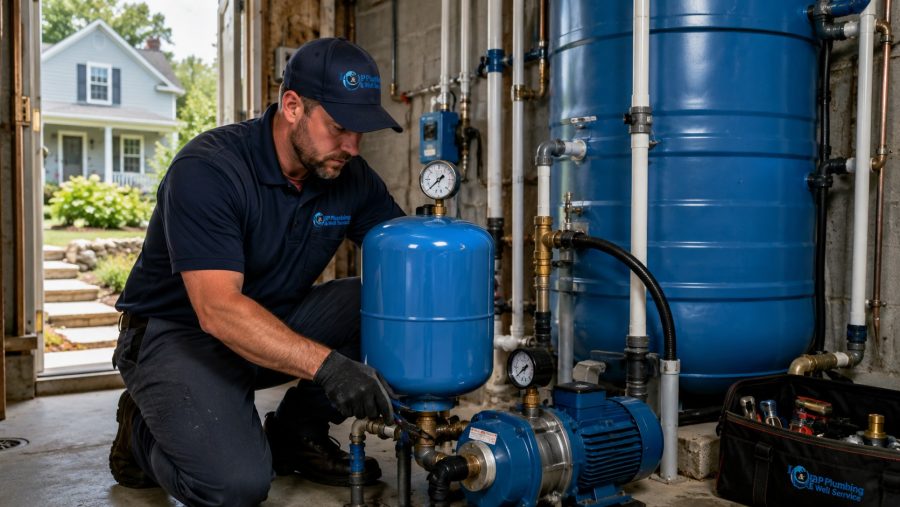
An atmospheric storage tank allows a low-flow well to fill the tank gradually. A separate booster pump then supplies the house at the pressure and flow required by showers, appliances, and fixtures.
Connecticut well regulations specifically allow storage through pressure tanks, non-pressurized tanks with booster pumps, or combinations of both.
For example, a well producing only a modest number of gallons per minute may still supply considerable water throughout an entire day if that water is collected and stored between periods of high demand.
Don’t Pour Delivered Water Into the Well
There is an important distinction between filling a storage tank and attempting to fill the actual well.
Connecticut DPH advises homeowners not to pour trucked bulk water into a dry well because much of that water may simply flow back through fractures into the surrounding formation.
Bulk potable water should instead be delivered into an appropriate storage system designed for that purpose.
The Connecticut DPH private well guidance provides additional information for private well owners.
Which Low-Well-Yield Solution Is Best?
We look at the complete water system before recommending major work.
A property may need:
Pump or pressure-tank repair when groundwater supply is adequate but equipment is failing.
Well deepening when additional borehole storage or deeper fractures may improve supply.
Hydrofracturing when existing bedrock fractures may respond to rehabilitation.
Storage tank plus booster pump when the well produces water consistently but cannot meet short periods of heavy demand.
A new well when the existing source cannot provide a dependable long-term supply.
The correct solution starts with testing, not guessing.
Restore Reliable Well Water Before the Next Dry Period
Seasonal low-water conditions can expose weaknesses that remain unnoticed during wetter months.
At L&P Plumbing & Well Service, we help Connecticut homeowners diagnose low pressure, intermittent water, well pump problems, pressure tank issues, and complete low-water emergencies. By measuring how the well and pumping system actually perform, we can determine whether equipment repairs, additional storage, or more extensive well work should be considered.
When water starts sputtering, disappearing, or recovering only after long periods of rest, early testing can help prevent a complete no-water emergency.