
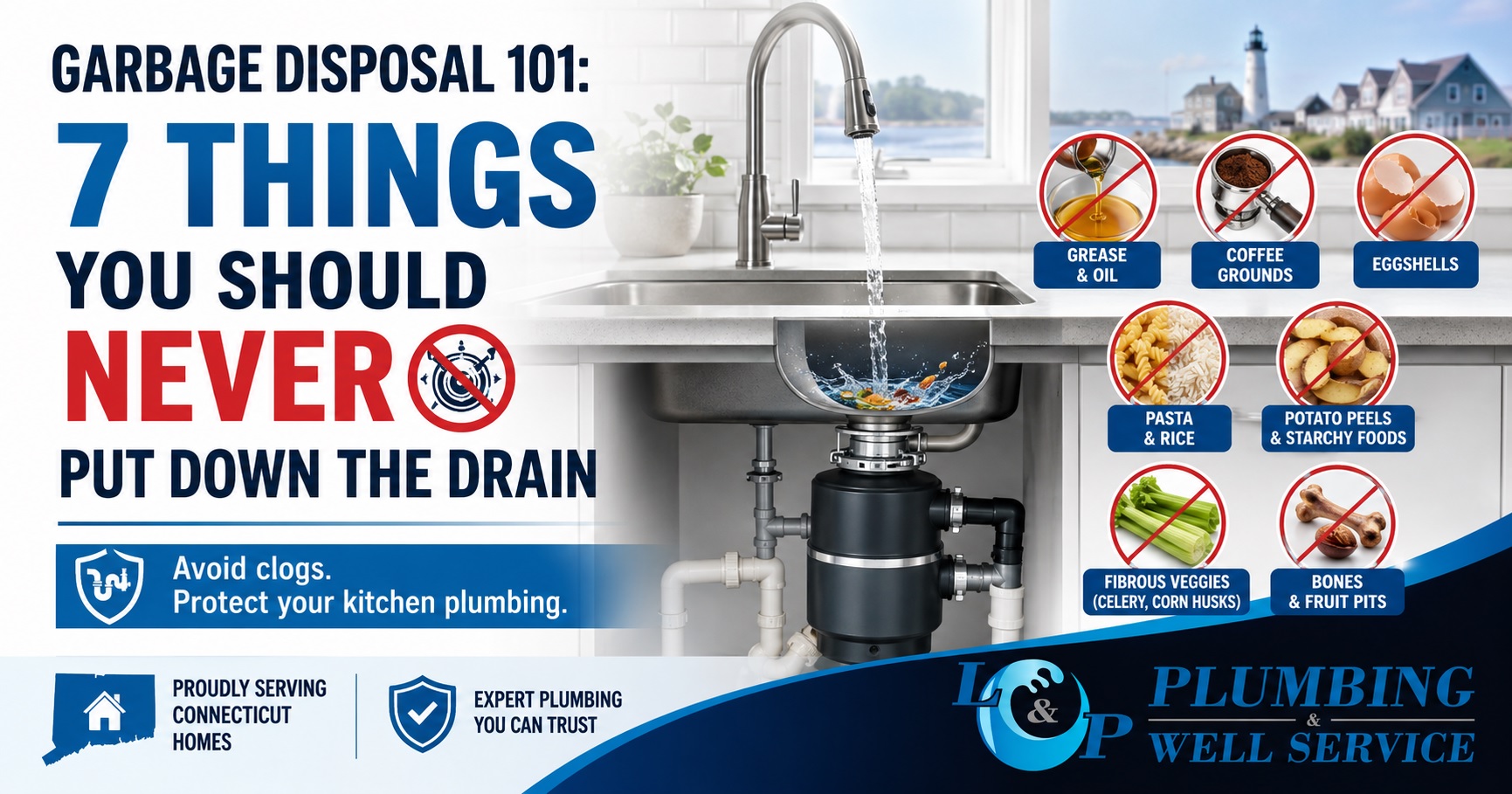
Your garbage disposal is helpful, but it is not a trash can. Many kitchen plumbing problems start when the wrong foods go down the drain. Over time, buildup can create a clogged sink, foul odors, slow drainage, or the need for garbage disposal repair.
If you live in Watertown, Torrington, or nearby Connecticut towns, these simple plumbing maintenance tips can help protect your kitchen sink and avoid preventable plumbing problems.
For help with sink issues, visit L&P Plumbing & Well Service or learn more about sink repair and installation.
1. Grease, Oil, and Fat
Grease may look harmless when it is hot, but it cools and hardens inside your pipes. This sticky buildup catches food particles and can lead to stubborn clogs.
Better option: Pour grease into a container, let it cool, and throw it in the trash.
2. Coffee Grounds
Coffee grounds do not dissolve. They collect inside drains and can create thick sludge, especially when mixed with grease or soap residue.
Better option: Toss coffee grounds in the trash or compost them if appropriate.
3. Eggshells
Some homeowners think eggshells sharpen disposal blades. They do not. The thin membrane inside shells can wrap around disposal parts, while crushed shell pieces can settle in the drain line.
Better option: Throw eggshells away or compost them.
4. Pasta and Rice
Pasta and rice continue to expand when they absorb water. Even small amounts can swell inside your drain and create a sticky blockage.
Better option: Scrape leftovers into the trash before rinsing plates.
5. Potato Peels and Starchy Foods
Potato peels, mashed potatoes, and other starchy foods can turn into a paste inside the disposal. That paste can coat the drain and slow water flow.
Better option: Put peels and heavy starches in the trash.
6. Celery, Corn Husks, and Fibrous Vegetables
Fibrous foods can wrap around disposal components and jam the unit. Celery strings, corn husks, onion skins, asparagus ends, and artichoke leaves are common troublemakers.
Better option: Dispose of fibrous scraps in the trash.
7. Bones, Pits, and Large Food Scraps
Garbage disposals are not designed to grind hard bones, fruit pits, seafood shells, or large chunks of food. These items can damage the disposal, dull components, or cause the unit to stop working.
Better option: Scrape plates well and feed only small, soft scraps into the disposal.
How to Use Your Garbage Disposal the Right Way
Keep your kitchen plumbing healthier with these simple habits:
- Run cold water before, during, and after using the disposal
- Add food scraps slowly
- Avoid overloading the unit
- Keep grease out of the drain
- Clean with mild dish soap and cold water
- Call a plumber if the sink backs up, smells bad, or drains slowly
If you already have a clogged sink, avoid harsh drain chemicals. They can damage pipes and may not solve the real blockage. Our sink services include fixing clogged sinks with professional tools rather than harsh chemicals.
When to Call L&P Plumbing & Well Service
Call a professional if your disposal hums but will not spin, leaks under the sink, smells bad, drains slowly, or keeps tripping the reset button.
L&P Plumbing & Well Service helps Connecticut homeowners with kitchen sink repair, fixture service, drain problems, and general plumbing repairs. For more helpful homeowner guides, visit the L&P Plumbing Blog or contact L&P Plumbing to schedule service.
FAQs
What causes a garbage disposal to clog?
Grease, coffee grounds, pasta, rice, eggshells, fibrous vegetables, and large food scraps are common causes of garbage disposal and kitchen sink clogs.
Can I put grease down the garbage disposal?
No. Grease can harden inside your pipes and create a clogged sink over time.
Why does my kitchen sink smell bad?
Food buildup, grease, trapped debris, or a disposal that is not draining properly can cause bad kitchen sink odors.
When do I need garbage disposal repair?
You may need garbage disposal repair if the unit leaks, hums, jams, smells, drains slowly, or stops turning on.