
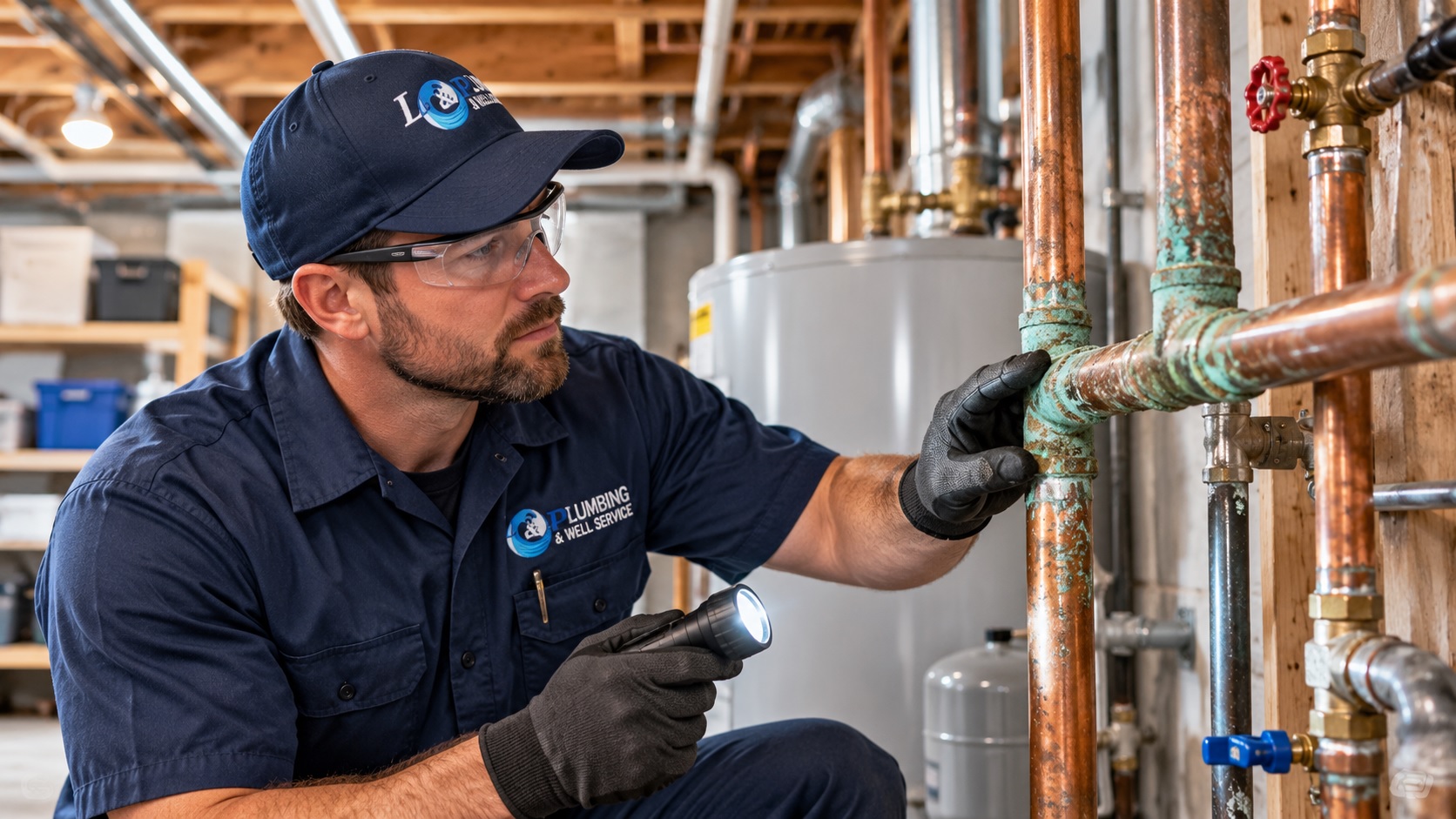
Copper pipes typically last 50 to 70 years, although some remain functional longer while others develop leaks much earlier. The copper pipe lifespan depends on water chemistry, pipe thickness, pressure, installation quality, and maintenance. Recurring pinhole leaks, visible corrosion, unexplained water damage, and declining water quality may indicate that repiping is necessary. A professional plumbing inspection can determine whether individual repairs or whole-house pipe replacement makes more sense.
How Long Do Copper Pipes Last in a Home?
Copper has been a trusted residential plumbing material for decades because of its durability, temperature resistance, and long service life.
However, copper plumbing does not last forever.
At L&P Plumbing & Well Service, we help Connecticut homeowners evaluate aging water supply lines, identify corrosion, and determine when to replace copper pipes.
Most homeowners can use 50 to 70 years as a general planning range, but age alone should never determine replacement.
A 60-year-old copper system with healthy pipes and favorable water conditions may outperform a much newer system exposed to aggressive water chemistry.
The actual condition of the plumbing matters more than its age.
Does Copper Pipe Type Affect Lifespan?
Copper plumbing is manufactured in different wall thicknesses.
| Copper Pipe Type | Characteristics | Common Applications |
|---|---|---|
| Type K | Thickest standard wall | Underground and specialized water supply installations |
| Type L | Medium wall thickness | Residential water supply plumbing |
| Type M | Thinner wall | Permitted residential plumbing applications |
Thicker copper generally provides more material to resist certain forms of wear and corrosion.
However, no pipe type guarantees a specific lifespan.
We recommend identifying the existing material, evaluating its condition, and confirming local plumbing code requirements before selecting a replacement.
5 Factors That Shorten Copper Pipe Lifespan
1. Acidic Well Water
Acidic water can gradually dissolve copper from the inside of supply lines.
Some Connecticut private wells contain low-pH water that may contribute to corrosion.
Common warning signs include blue-green stains around drains, metallic-tasting water, and recurring pinhole leaks.
According to the Connecticut Department of Public Health, aggressive water chemistry and improper installation practices can contribute to copper pipe corrosion.
2. Excessive Water Pressure
High water pressure can place unnecessary stress on pipes, fittings, and plumbing fixtures.
Elevated water velocity may also contribute to erosion corrosion, particularly around fittings and bends.
3. Poor Installation
Improper soldering, excessive flux, inadequately deburred tubing, and poorly supported pipes can increase the risk of premature failure.
Correct installation is essential for long-term reliability.
4. Water Chemistry and Mineral Content
Water pH, alkalinity, chlorides, and other dissolved substances influence how copper interacts with the water supply.
We recommend professional water testing when corrosion appears repeatedly.
5. Environmental Conditions
Pipes exposed to freezing temperatures, movement, or corrosive external conditions may deteriorate faster.
Connecticut winters can be particularly challenging for plumbing installed in poorly insulated spaces.
7 Warning Signs You May Need to Replace Copper Pipes
Knowing when to replace copper pipes can prevent expensive water damage.
1. Recurring Pinhole Leaks
One isolated leak may require only a targeted repair.
However, multiple pinhole leaks appearing in different locations can indicate widespread internal corrosion.
2. Blue-Green Stains Around Fixtures
Green or turquoise staining may indicate that copper is dissolving into the water.
These stains deserve investigation, especially when the home uses a private well.
3. Visible Corrosion on Exposed Pipes
Green deposits, unusual discoloration, and deteriorating fittings can indicate plumbing problems.
Not every surface discoloration means a pipe has failed, but significant corrosion warrants inspection.
4. Unexplained Water Damage
Damp drywall, ceiling stains, and moisture beneath cabinets may indicate hidden pipe leaks.
We recommend locating the source promptly to limit further damage.
5. Declining Water Pressure
Low water pressure can result from leaks, restrictions, faulty valves, or other plumbing problems.
When pressure declines throughout the home, the complete supply system should be evaluated.
6. Frequent Plumbing Repairs
Repeated repairs can become expensive.
When several sections of copper plumbing fail, replacing the affected system may provide better long-term value than continuing temporary fixes.
7. Aging Pipes With Multiple Problems
Older copper pipes do not automatically need replacement.
However, advanced age combined with corrosion, leaks, and recurring maintenance problems is a strong reason to consider repiping.
Copper Pipe Repair vs. Whole-House Repiping
Not every damaged pipe requires replacing the entire plumbing system.
| Pipe Repair May Be Better | Repiping May Be Better |
|---|---|
| One isolated leak | Multiple recurring leaks |
| Healthy surrounding pipes | Widespread corrosion |
| Localized fitting failure | Deteriorating supply lines |
| No significant water chemistry issues | Ongoing corrosion affecting multiple areas |
| Limited repair history | Increasing repair expenses |
At L&P Plumbing & Well Service, we evaluate the plumbing system before recommending a solution.
Our pipe repair and repiping services in Watertown, CT include targeted repairs, copper pipe replacement, PEX installation, and whole-house repiping.
Should You Replace Copper Pipes With PEX?
PEX is a common alternative to copper for residential repiping.
It offers flexibility, resistance to metal corrosion, and installation options that may reduce the number of fittings.
Copper remains a dependable material when installed correctly and used with compatible water conditions.
We evaluate the home’s layout, existing plumbing, water quality, and budget before recommending either material.
Important: Replacing corroded copper pipes without correcting aggressive water chemistry may leave other metal plumbing components vulnerable.
For more information, read our related article, How Acidic Well Water Damages Copper Pipes.
Frequently Asked Questions
Can copper pipes last 100 years?
Some copper plumbing systems may remain functional for exceptionally long periods. However, 100 years should not be assumed as a standard service life.
Should 50-year-old copper pipes be replaced?
Not automatically. We recommend evaluating their condition, repair history, water chemistry, and corrosion before deciding.
Do pinhole leaks mean the entire house needs repiping?
Not necessarily. One localized leak may be repairable, while repeated leaks in different areas can indicate broader deterioration.
Is PEX better than copper for repiping?
Both materials have advantages. PEX resists metal corrosion and offers flexibility, while copper provides rigid construction and a long-established performance history.
Get Professional Copper Pipe Repair and Repiping in Watertown, CT
Knowing how long copper pipes last helps homeowners plan repairs before serious plumbing failures occur.
At L&P Plumbing & Well Service, we provide professional plumbing inspections, pipe repairs, and whole-house repiping throughout Watertown and surrounding Litchfield County communities.
With more than 25 years of local experience, owners Sean and Jerry personally handle our plumbing projects.
Whether you’re experiencing recurring pinhole leaks or considering a complete plumbing upgrade, we’ll help determine the most practical solution.