
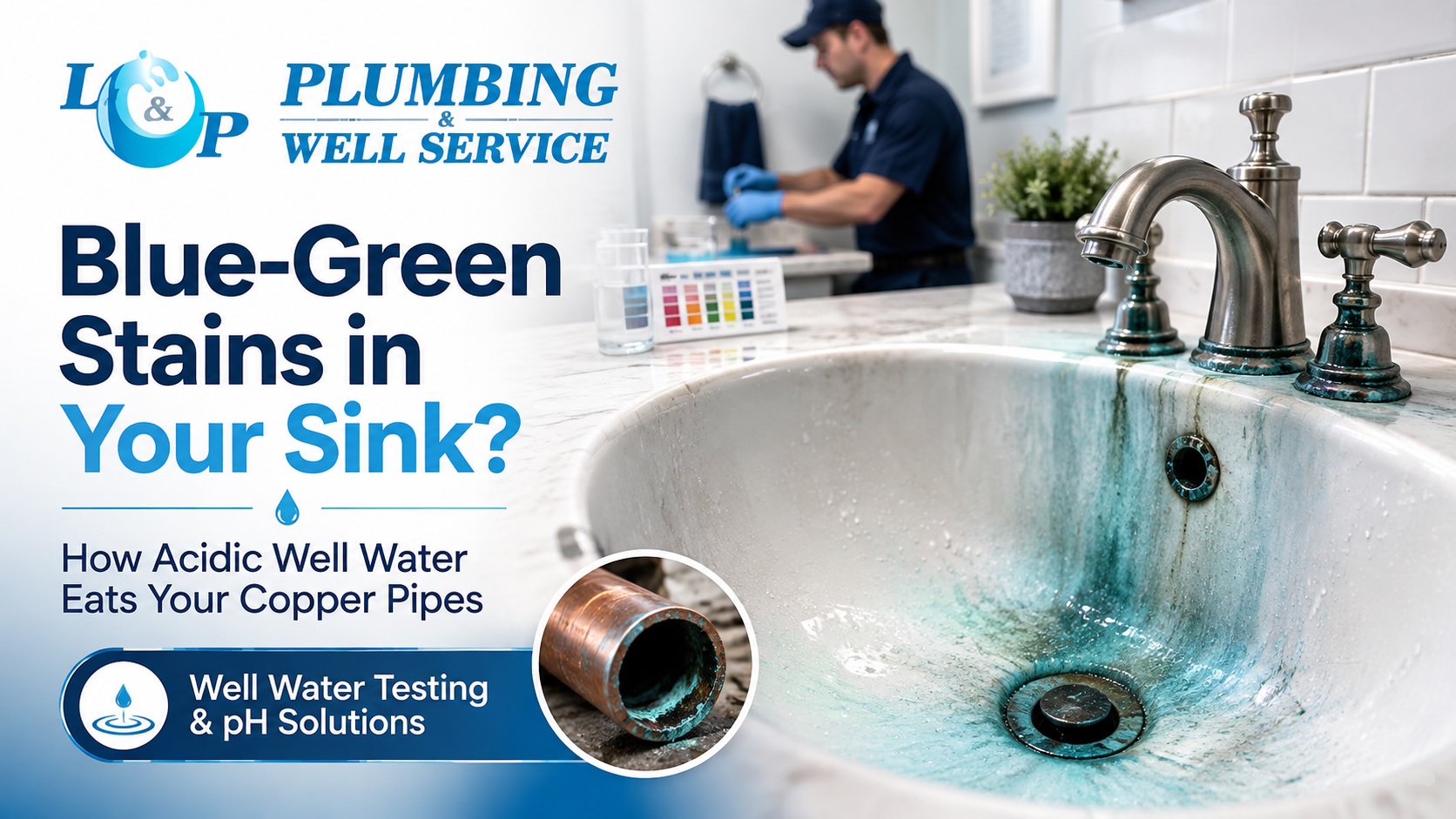
Blue-green stains on faucets, sinks, tubs, and shower surfaces often indicate that corrosive water is dissolving copper from household pipes or brass fixtures. Well water with a pH below 6.5 deserves prompt attention, although alkalinity, hardness, chloride, and plumbing materials also influence corrosion. A laboratory water test can confirm the pH and copper level. When low pH is the cause, a properly sized calcite acid neutralizer can raise the pH, reduce corrosivity, and help protect pipes, fixtures, appliances, and water heaters. Connecticut lists 6.5 to 8.5 as the secondary pH range for drinking water and warns that low-pH water tends to be corrosive.
A faint turquoise ring around a drain can seem like a cleaning problem. For Connecticut homeowners with private wells and copper plumbing, that stain may be an early warning that the water is slowly damaging the plumbing system.
At L&P Plumbing & Well Service, we look beyond the visible stain. Our team evaluates the water chemistry, piping condition, well equipment, and treatment needs before recommending a solution.
Why Acidic Water Creates Blue-Green Stains
Copper normally develops a protective layer inside plumbing lines. Corrosive water can interfere with that protection and gradually dissolve copper into the water.
As copper-containing water reaches a sink, tub, shower, or faucet and then evaporates, colored deposits can remain behind. The EPA associates copper with metallic taste and blue-green staining, while Connecticut DPH confirms that elevated copper can create bitter or metallic water and blue-green stains on fixtures.
Common warning signs include:
- Blue, green, or turquoise stains around drains
- Metallic-tasting water
- Green deposits on faucet aerators
- Small leaks in copper supply lines
- Repeated pipe repairs in different areas
- Premature damage to valves, fittings, or water heaters
Visible staining does not reveal the actual copper concentration. Water testing remains the safest way to determine what is happening.
Is Water Below 6.5 pH Dangerous to Plumbing?
The pH scale measures how acidic or alkaline water is. A value of 7 is neutral, while values below 7 are acidic.
Connecticut’s recommended secondary range is 6.5 to 8.5. Water below 6.5 can become increasingly aggressive toward metal plumbing, especially when alkalinity and hardness are also low. CT DPH notes that corrosivity may be influenced by pH, alkalinity, hardness, chloride, sulfate, and dissimilar plumbing metals.
That means a basic test strip provides only part of the answer. A thorough well water evaluation may include:
- pH
- Alkalinity
- Hardness
- Copper
- Lead
- Chloride
- Sulfate
- Iron and manganese
Connecticut recommends testing for metals when well water shows signs of corrosivity because low-pH water can leach copper, lead, and other metals from household plumbing.
How Acidic Water Causes Pinhole Leaks
A pinhole leak forms when corrosion weakens a small area of copper pipe until water breaks through the wall. The first leak may appear beneath a sink, above a finished ceiling, inside a basement, or behind drywall.
Repairing the damaged section stops that leak, but it does not correct the water chemistry. When low pH continues untreated, other areas may remain vulnerable.
Corrosive water may also shorten the service life of:
- Copper supply lines
- Brass valves and fittings
- Water heater components
- Well pressure equipment
- Faucets and plumbing fixtures
A lasting repair strategy should address both the failed plumbing and the cause of corrosion.
How to Fix Low pH in Well Water
A whole-house acid neutralizer is one of the most common treatments for moderately acidic well water. The tank contains calcium carbonate media, commonly called calcite.
As water flows through the tank, the calcite gradually dissolves and neutralizes acidity. This process raises pH and adds calcium to the water. Penn State Extension explains that acid-neutralizing filters reduce corrosivity by increasing pH and calcium content. UGA Extension also identifies calcium carbonate filtration as a standard treatment for acidic private well water.
Does an Acid Neutralizer Make Water Harder?
Calcite adds calcium, so treated water may become harder. A home with existing hardness may need a water softener after the neutralizer.
System order matters. The neutralizer generally treats acidity first, followed by equipment selected to address hardness, iron, sediment, or other tested conditions. Our well water filtration services provide customized options for Connecticut well water rather than relying on a one-filter approach.
Very low pH or high water demand may require a different treatment method, such as a soda ash chemical-feed system. Testing should always come before equipment selection.
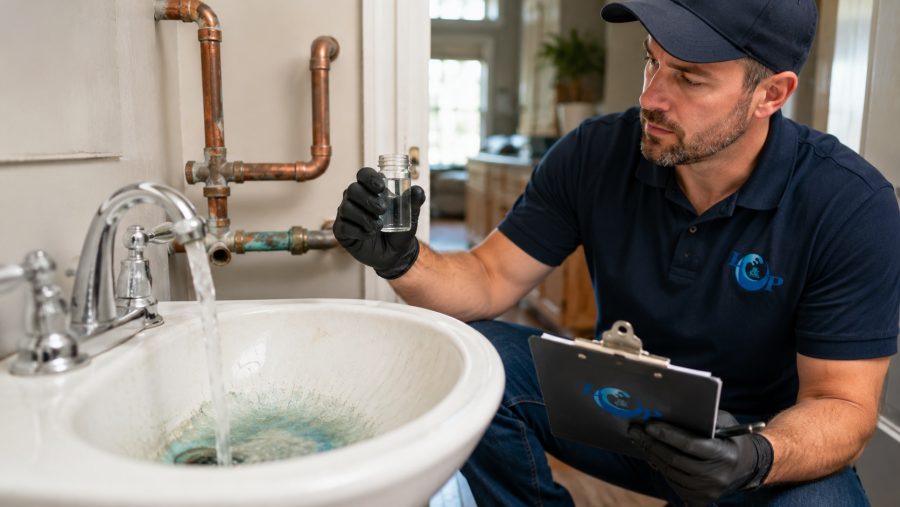
Acid Neutralizer for Well Water Cost
A published national planning range places many calcite acid neutralizer systems between $800 and $2,500, but the final installed cost can vary based on tank size, flow rate, plumbing modifications, controls, media capacity, and whether additional treatment is required.
The total estimate may also include:
- Laboratory water analysis
- Existing pipe repairs
- Bypass valves and drain connections
- Calcite media replacement
- Sediment prefiltration
- A water softener or iron filter
A water test allows us to recommend the correct equipment instead of pricing a system based only on visible stains.
Test the Water Before Replacing More Pipes
Cleaning blue-green stains removes the symptom, not the source. Replacing one leaking pipe may also provide only temporary relief when corrosive water continues flowing through the rest of the home.
Owners Sean and Jerry personally handle water treatment assessments and system installations for L&P Plumbing & Well Service. Our local team evaluates the well water, treatment equipment, pressure system, and affected plumbing before developing a practical solution.
Contact L&P Plumbing & Well Service to book a comprehensive well water chemistry and pH test. We can determine whether acidic water is contributing to blue-green stains, copper corrosion, or recurring pinhole leaks and recommend the right treatment for the home.