

A water heater making popping noise or rumbling usually has sediment buildup at the bottom of the tank. In Connecticut homes with hard water or well water, calcium, magnesium, sand, and minerals can settle inside the tank. When the burner or heating elements heat the water, steam bubbles get trapped under that sediment layer, then burst upward with a popping, knocking, or rumbling sound. USGS notes that hard water can cause mineral buildup in plumbing, fixtures, and water heaters.
Why Your Water Heater Sounds Like It Is Knocking
At L&P Plumbing & Well Service, we hear this concern often from homeowners in Watertown, Woodbury, Middlebury, Bethlehem, Thomaston, Litchfield, Wolcott, and nearby CT towns.
The sound may seem like the tank is about to burst, but the most common cause is sediment. Over time, minerals and particles settle at the bottom of a tank-style water heater. Heat gets trapped below that layer. As water boils under the sediment, bubbles push through and create popping, crackling, knocking, or rumbling noises.
What Causes Sediment Buildup in Water Heater Tanks?
Sediment buildup in water heater tanks usually comes from:
- Hard water minerals
- Well water sediment
- Iron or mineral particles
- Aging plumbing lines
- Lack of annual flushing
- High water temperature settings
- Older tank interiors
Connecticut well water homes can be more vulnerable because water quality varies from property to property. That is why well water treatment and well water filtration can be just as important as the water heater itself.
Why Sediment Is Bad for the Tank
Sediment does more than make noise. It can make the water heater work harder because heat must pass through the buildup before warming the water.
A dirty tank can lead to:
- Longer recovery time
- Higher energy use
- Less hot water
- Overheated tank bottom
- Heating element strain
- Tank corrosion risk
- Premature water heater failure
If the tank is electric, mineral scale can coat heating elements. If the tank is gas-fired, sediment can bake onto the bottom of the tank and create hot spots.
How to Flush Water Heater Sediment Safely
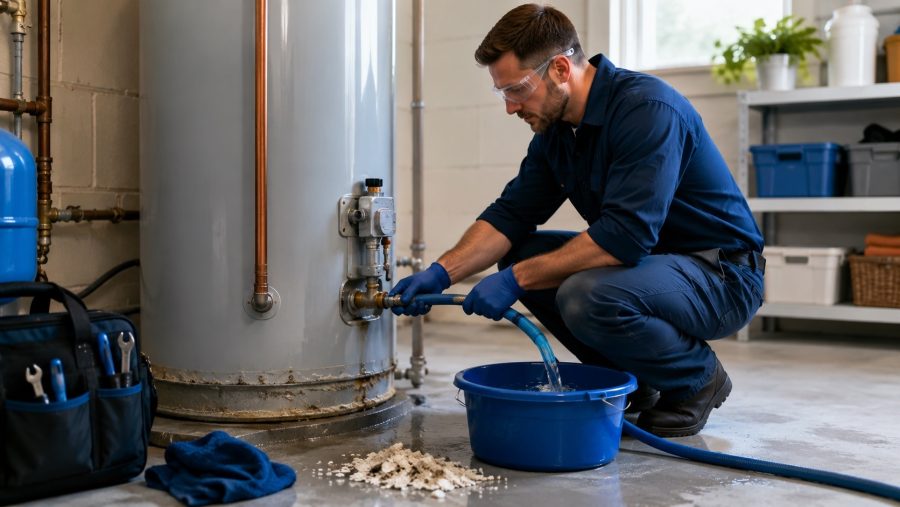
Many homeowners search “how to flush water heater” after the noise starts. A basic flush involves turning off power or fuel, letting hot water cool, connecting a hose to the drain valve, draining water to a safe location, and flushing until water runs clearer. Maintenance guidance from the U.S. Department of Energy’s Building America resources notes that suspended solids can settle at the bottom of a tank and recommends draining water from the tank to prevent buildup.
That said, flushing is not always a safe do-it-yourself job. Call a plumber when:
- The tank is old
- The drain valve is plastic, rusted, or leaking
- Water is discolored
- Noises are loud or worsening
- Hot water runs out quickly
- The heater has not been flushed in years
- The unit is near electrical panels, finished flooring, or storage
For older tanks, a flush can loosen heavy sediment and expose weak valves or corrosion issues. Professional service helps reduce that risk.
Annual Water Heater Maintenance Helps Prevent Bigger Repairs
A water heater should not wait until it rumbles. Annual water heater maintenance can help remove sediment before it hardens, check the anode rod, test safety components, inspect connections, and confirm the system is operating correctly.
L&P Plumbing & Well Service provides water heater repair and replacement along with full plumbing services for local homes. If the heater keeps making noise after a flush, the next step may be a deeper inspection, element service, water treatment review, or replacement estimate.
When Noises Mean Replacement May Be Near
A simple popping sound may be sediment. But some signs point to a bigger problem:
- Rusty hot water
- Leaks around the tank
- No hot water
- Rotten egg odor
- Water near the base
- Frequent breaker trips
- Loud banging during every heating cycle
- Tank age over expected service life
When these symptoms appear, schedule service before the tank fails and causes water damage.
Stop the Rumbling Before the Tank Breaks Down
A water heater making popping noise is an early warning. Sediment buildup in water heater tanks can reduce performance, strain heating parts, and shorten equipment life. Annual flushing and water quality treatment help protect the tank, especially in CT homes with hard well water.
For annual water heater maintenance, tank flushing, hard water concerns, or replacement guidance, contact L&P Plumbing & Well Service. Our team helps Watertown and nearby Connecticut homeowners keep hot water systems safer, cleaner, and more dependable.
FAQs
Why is my water heater making popping noise?
Popping usually happens when steam bubbles escape through sediment at the bottom of the tank. Hard water minerals and well sediment often cause the buildup.
What is sediment buildup in a water heater?
Sediment buildup is the layer of minerals, sand, rust, or particles that settles at the bottom of a tank-style water heater.
How often should a water heater be flushed?
Many homes benefit from annual flushing. Homes with hard water, well water, or heavy sediment may need more frequent service based on water quality and manufacturer guidance.
Can sediment ruin a water heater?
Yes. Sediment can make the tank overheat, reduce efficiency, strain heating elements, increase corrosion risk, and shorten service life.
Who handles water heater flushing near Watertown CT?
L&P Plumbing & Well Service provides water heater maintenance, flushing, repair, replacement, water filtration, and well water treatment for Watertown and nearby CT communities.