
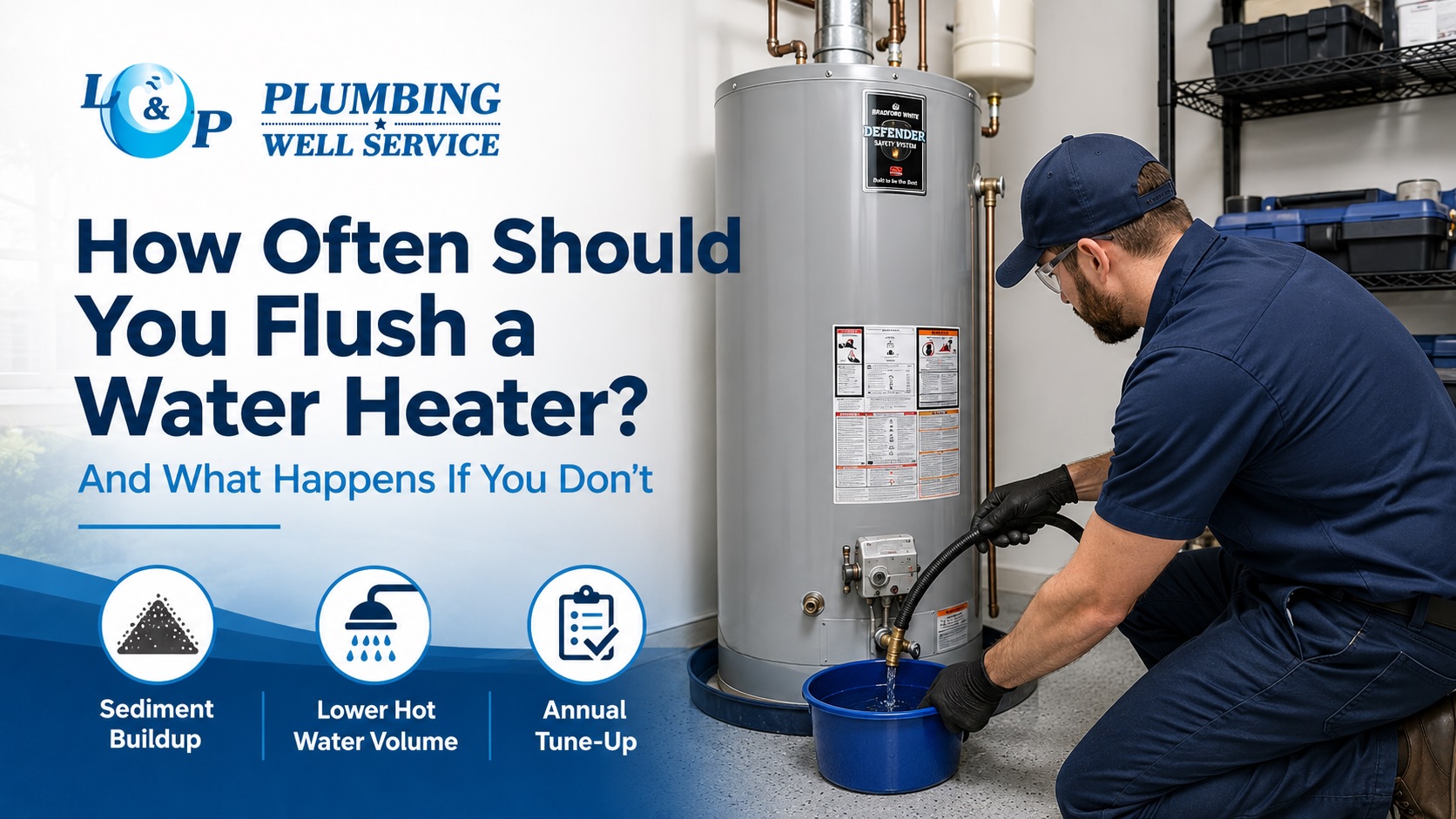
Most tank-style water heaters should be flushed about once a year. Homes with hard water or heavy mineral buildup may benefit from flushing about every six months. Sediment that stays in the tank can contribute to popping or rumbling noises, slower recovery, reduced usable hot water, added strain on burners or heating elements, and higher energy use. Rheem currently recommends annual flushing for most homes and more frequent service where hard water accelerates sediment accumulation.
At L&P Plumbing & Well Service, we treat water heater flushing as preventive maintenance rather than waiting for the tank to become noisy, slow, or unreliable.
A relatively simple annual service can reveal sediment, corrosion, valve problems, anode wear, or other developing concerns before they turn into a no-hot-water call.
Why Sediment Builds Up Inside a Water Heater
Minerals and suspended material enter the water heater with the home’s water supply. Over time, some of that material settles at the bottom of the tank.
Rheem explains that this sediment layer can interfere with heat transfer, forcing the water heater to work harder and placing additional stress on heating components.
The problem can become more noticeable in homes with mineral-heavy or hard water.
For Watertown-area homes supplied by wells, water chemistry can vary considerably. Our well water filtration services address sediment, hard water minerals, iron, manganese, and other water-quality concerns that can affect plumbing equipment throughout the home.
Water Heater Sediment Buildup Symptoms
Several warning signs may point toward excess sediment inside a tank.
Popping or Rumbling Noises
One of the most recognizable water heater sediment buildup symptoms is a popping, crackling, or rumbling sound during a heating cycle.
Sediment can form a layer between the heat source and the water. As the heater operates, trapped water and mineral deposits can create unusual noises. Rheem lists rumbling and popping among the common signs that a tank may need flushing.
Running Out of Hot Water Faster
A tank may still hold the same number of gallons physically, yet heavy deposits can interfere with normal heating performance.
Homeowners may notice that showers become cold sooner or that the heater takes longer to recover between uses. Both reduced hot-water availability and longer recovery times are listed by Rheem as possible signs of sediment buildup.
Higher Heating Demand
Sediment can act as an insulating layer at the bottom of the tank. That reduces efficient heat transfer and can force the burner or heating elements to operate longer.
Heating Element or Burner Stress
Electric water heaters rely on heating elements, while gas units rely on burners.
When deposits reduce heat transfer, those components can face additional operating strain. Regular flushing helps reduce sediment accumulation and supports normal heating performance.
How Often Should a Water Heater Be Flushed?
For most tank water heaters, once per year is a practical maintenance schedule.
Rheem recommends flushing annually for most households and about every six months where hard water is present. Actual maintenance needs can vary according to water quality, household water use, tank design, and manufacturer instructions.
A home may need more frequent attention when:
- Well water carries noticeable sediment
- Hard-water scale develops rapidly
- The tank starts making noise
- Hot-water capacity seems reduced
- The heater experiences unusually heavy use
- Previous maintenance has been inconsistent
Tankless systems follow a different process and typically require periodic descaling rather than the same tank-flushing procedure.
How to Flush a Water Heater
Homeowners researching how to flush water heater tanks should first check the manufacturer’s instructions for the exact model.
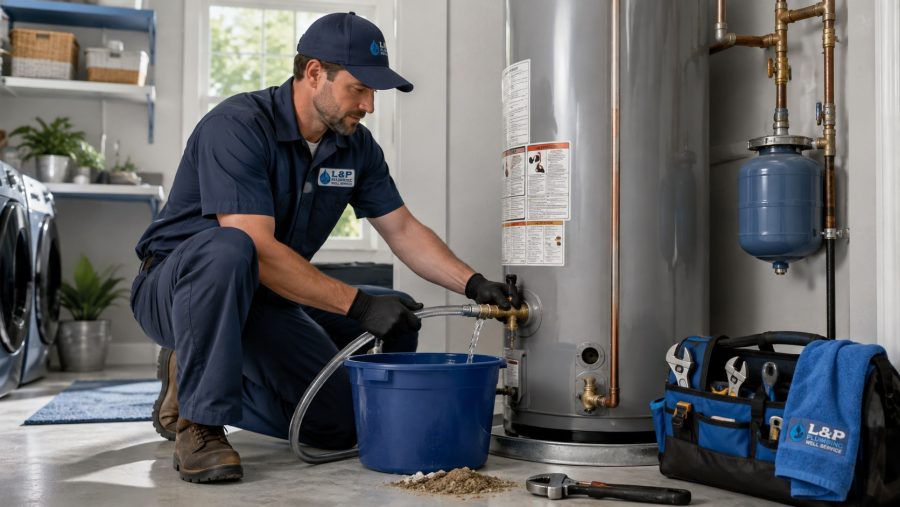
A typical tank flushing process includes:
- Shut off power to an electric heater or properly shut down the gas system.
- Shut off the cold-water supply.
- Attach a suitable hose to the tank’s drain valve.
- Route the hose somewhere hot water can drain safely.
- Open the appropriate valve and drain the tank.
- Flush accumulated material from the bottom.
- Close the drain valve and restore the cold-water supply.
- Remove trapped air through hot-water fixtures.
- Restore power or gas only after the tank has properly refilled.
Rheem outlines a similar sequence and notes that professional help makes sense when a drain valve is stuck, corrosion is present, sediment is severe, or the homeowner is uncomfortable working around electrical or gas components. See Rheem’s water heater flushing guidance.
What Happens If You Never Flush the Tank?
Skipping maintenance does not guarantee immediate failure, but sediment can continue accumulating.
Over time, that can mean:
- More rumbling and popping
- Slower heating
- Less dependable hot water
- Greater strain on components
- Higher operating costs
- Drain valves clogged with sediment
- More difficult future maintenance
Annual maintenance can also provide an opportunity to inspect other components before they fail. Rheem’s recommended tank maintenance checklist includes draining and flushing, inspecting the anode rod, checking the temperature and pressure relief valve, and inspecting heating elements or burners depending on the system.
What Affects Water Heater Flushing Cost?
Water heater flushing cost varies according to the condition and configuration of the system rather than one universal service price.
Factors can include:
- Tank age
- Amount of sediment
- Accessibility
- Drain valve condition
- Gas versus electric equipment
- Additional maintenance required
- Anode rod or valve concerns discovered during service
A tank that receives regular annual maintenance is usually easier to service than one containing years of hardened sediment.
Our water heater services in Watertown, CT cover maintenance, repair, replacement, tank systems, and tankless equipment. L&P Plumbing & Well Service provides owner-operated service for homes throughout Watertown and the surrounding region.
Make Water Heater Flushing Part of Annual Maintenance
Waiting until a water heater starts rumbling or producing less hot water means sediment may already be affecting performance.
We recommend making tank flushing part of a broader maintenance routine that evaluates the drain valve, anode rod, safety components, heating system, leaks, and overall tank condition.
Schedule an annual water heater tune-up and system flush with L&P Plumbing & Well Service.