
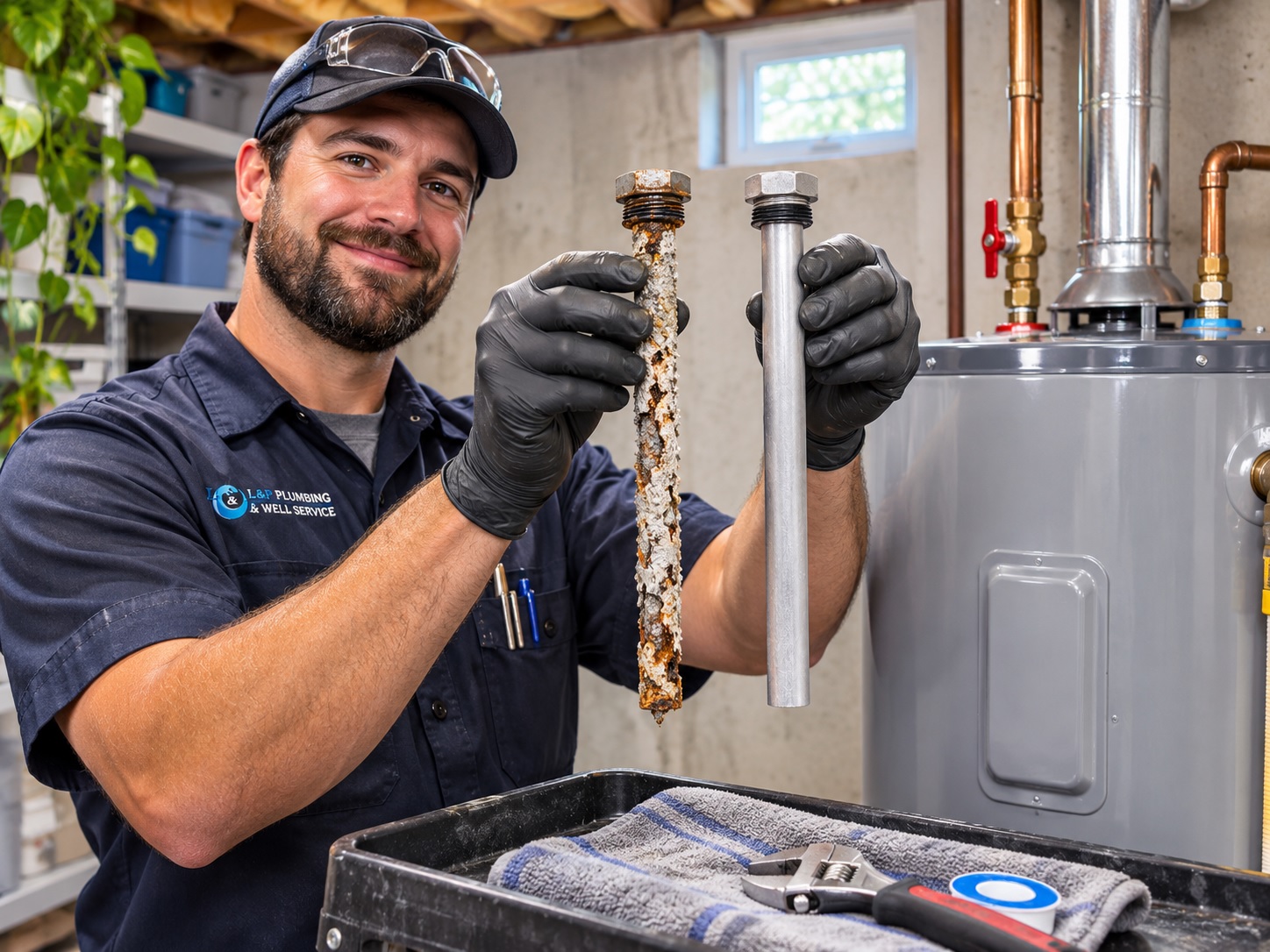
A water heater anode rod is a sacrificial metal component that protects the steel tank from internal corrosion. As the rod gradually deteriorates, it corrodes in place of the tank, helping prevent rust and premature leaks. Most traditional tank water heaters benefit from anode rod inspections every 1 to 3 years, or more frequently when required by the manufacturer. Replacement is necessary when the rod becomes substantially depleted. Regular anode rod maintenance can extend water heater lifespan and reduce the risk of costly tank failure.
What Is a Water Heater Anode Rod?
Most conventional tank-style water heaters contain a long metal rod designed to protect the inside of the tank from corrosion.
This component is called a sacrificial anode rod.
At L&P Plumbing & Well Service, we help Connecticut homeowners maintain water heaters, diagnose corrosion concerns, and prevent premature equipment failure.
Although many homeowners regularly check water temperature and flush sediment, the anode rod is often overlooked.
However, it plays an important role in protecting the steel tank.
Without a functioning anode rod, exposed steel inside the tank becomes more vulnerable to rust.
How Does a Sacrificial Anode Protect Your Water Heater?
Most traditional water heater tanks are manufactured with a protective glass lining over steel.
Over time, small imperfections in the lining may expose metal to water.
A sacrificial anode rod helps protect these exposed areas through an electrochemical process called cathodic protection.
The rod is typically manufactured using magnesium, aluminum, or an aluminum-zinc alloy.
Because its metal is more electrochemically active than the steel tank, the rod gradually corrodes instead of the protected steel.
The important difference is that the anode rod is designed to wear out so the water heater tank lasts longer.
Once the rod becomes depleted, the tank loses that protection.
How Often Should You Replace a Water Heater Anode Rod?
There is no universal replacement schedule for every water heater.
According to A. O. Smith’s Water Heater Maintenance Guide, anode rods should be inspected annually, with replacement determined by their condition.
Several factors influence how quickly a rod deteriorates.
| Water Condition | Effect on Anode Rod |
|---|---|
| Typical household water | Gradual deterioration |
| Softened water | May accelerate consumption |
| High hot water usage | Can increase wear |
| Aggressive water chemistry | May accelerate corrosion |
| Higher operating temperatures | Can increase deterioration |
Some manufacturers recommend inspections within the first year, while others specify longer initial intervals.
At L&P Plumbing & Well Service, we recommend following the manufacturer’s maintenance requirements rather than automatically replacing a rod based only on age.
5 Signs Your Water Heater Anode Rod May Need Replacement
1. The Anode Rod Is Visibly Deteriorated
The clearest sign is substantial physical wear.
A depleted rod may have significant sections of exposed steel core or severely reduced thickness.
A professional inspection can confirm whether replacement is necessary.
2. Rusty or Discolored Hot Water
Brown or reddish water from hot faucets may indicate corrosion inside the water heater.
However, rusty water can also originate from plumbing pipes, well water minerals, or other components.
We recommend identifying the source before assuming the anode rod has failed.
3. Rotten Egg Smell From Hot Water
Certain water conditions can cause reactions involving the anode rod and sulfur compounds.
This may contribute to a rotten egg odor.
The smell does not automatically mean the rod needs replacement.
Water testing and appropriate treatment may be necessary.
4. The Water Heater Is Several Years Old
If a traditional tank water heater has operated for years without an anode rod inspection, maintenance may be overdue.
We recommend checking the rod during scheduled water heater servicing.
5. Your Home Uses a Water Softener
Softened water can accelerate anode consumption in certain water heater systems.
Homeowners using water softeners may need more frequent inspections.
How Anode Rod Replacement Extends Water Heater Life
Replacing a worn sacrificial anode helps maintain corrosion protection inside the water heater tank.
This can provide several benefits:
- Reduced risk of internal steel corrosion
- Lower likelihood of premature tank leaks
- Better protection for glass-lined steel tanks
- Longer potential equipment service life
- Fewer unexpected replacement expenses
However, anode rod replacement cannot repair an existing hole or reverse severe tank corrosion.
If the tank itself is leaking, complete water heater replacement is usually necessary.
How Is a Water Heater Anode Rod Replaced?
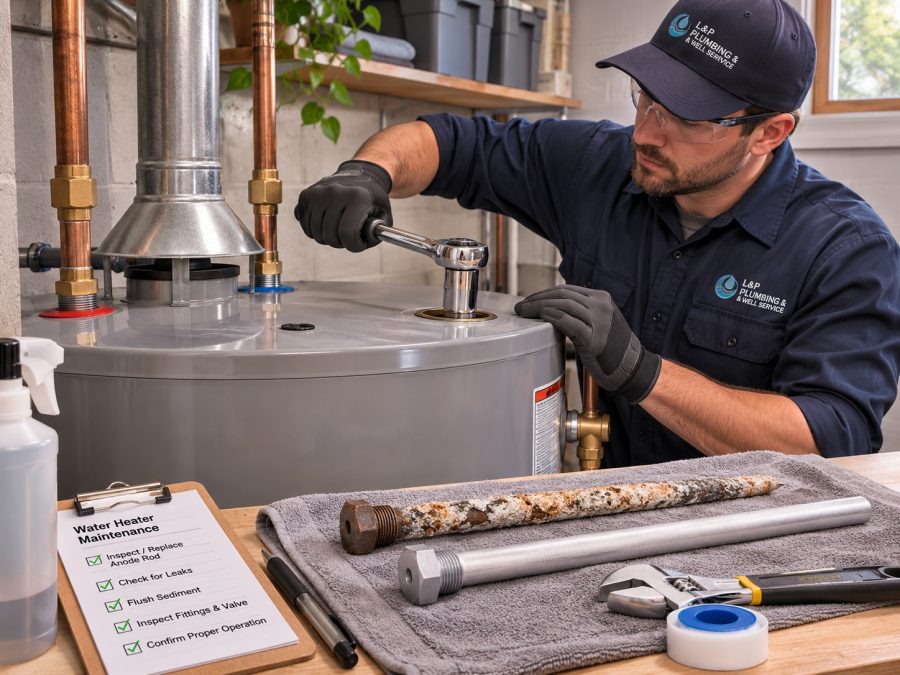
Anode rod replacement involves more than simply removing an old component.
Our professional maintenance process generally includes:
- Confirming the water heater model and compatible anode rod.
- Safely shutting down the heating equipment and isolating the water supply.
- Relieving pressure and preparing the tank for service.
- Removing and inspecting the existing rod.
- Installing the correct replacement when required.
- Refilling the system, checking connections, and restoring operation safely.
Anode rods can be difficult to remove, particularly when corrosion or limited overhead clearance complicates access.
We recommend professional replacement because incorrect procedures can damage the tank or create electrical, gas, pressure, and scalding hazards.
Should You Replace the Anode Rod or the Entire Water Heater?
Replacing the anode rod is generally more practical when the water heater tank remains structurally sound and the equipment operates reliably.
Complete replacement may be more appropriate when:
- The tank has developed an active leak.
- Extensive corrosion is already present.
- Multiple components are deteriorating.
- The water heater is approaching the end of its expected service life.
- Repair expenses are no longer economical.
At L&P Plumbing & Well Service, our water heater repair and replacement services in Watertown, CT help homeowners evaluate equipment condition before deciding whether maintenance or replacement is appropriate.
Other Ways to Extend Water Heater Lifespan
Anode rod maintenance works best as part of a complete preventive maintenance plan.
We recommend flushing sediment according to manufacturer guidelines, maintaining appropriate water pressure, checking for leaks, and inspecting safety components.
For additional maintenance advice, read our related article, How Often Should You Flush a Water Heater?.
Frequently Asked Questions
How long does a water heater anode rod last?
Lifespan varies with water chemistry, temperature, and usage. Regular inspections are more reliable than assuming a fixed replacement interval.
Can you run a water heater without an anode rod?
We do not recommend removing a sacrificial anode permanently. Doing so can accelerate tank corrosion and may void manufacturer warranty coverage.
Will replacing an anode rod fix rusty water?
It may help prevent additional corrosion, but it cannot reverse existing tank damage or resolve rusty water originating elsewhere.
Do tankless water heaters have anode rods?
Most conventional tankless water heaters do not use sacrificial anode rods because they do not store water in a glass-lined steel tank.
Protect Your Water Heater With L&P Plumbing & Well Service
A functioning water heater anode rod is an important defense against premature tank corrosion.
At L&P Plumbing & Well Service, we provide water heater maintenance, repair, installation, and replacement throughout Watertown and Litchfield County, Connecticut.
With more than 25 years of experience, owners Sean and Jerry personally attend our plumbing projects.
Whether your water heater needs an anode rod inspection, sediment flushing, or replacement, we can help determine the appropriate solution.