
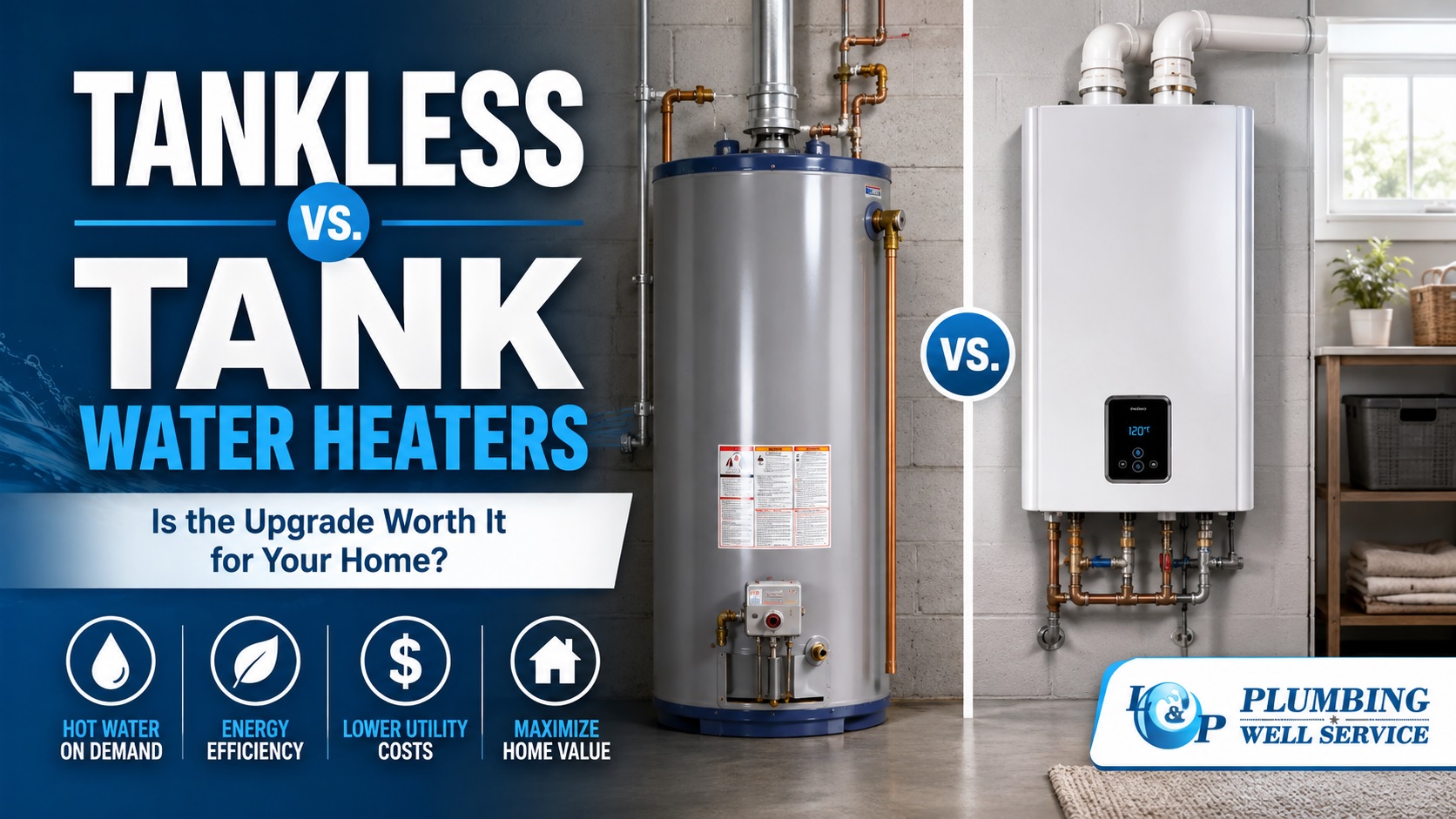
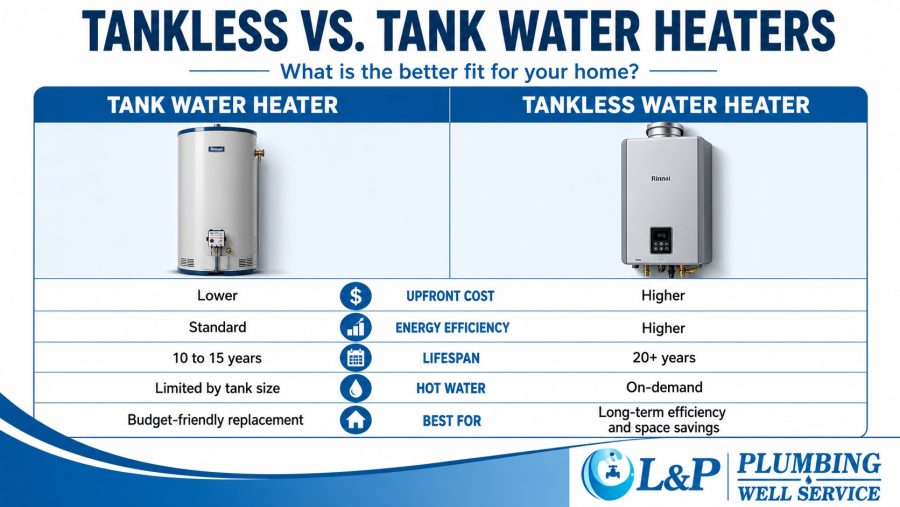
For many Connecticut homes, the tankless water heater vs tank decision comes down to budget, hot water demand, fuel type, space, and long-term ownership plans. Tankless water heaters heat water as needed, deliver continuous hot water within their flow-rate limit, and can be 24% to 34% more energy efficient for homes using 41 gallons or less of hot water daily. Storage tank water heaters usually cost less upfront and work well for households that need a large volume of hot water available at once. The Department of Energy notes that tankless models often last more than 20 years, while storage water heaters commonly last 10 to 15 years.
How Tank Water Heaters Work
A traditional tank water heater stores heated water in a 40 to 80 gallon tank. When someone showers, runs laundry, or uses a dishwasher, hot water leaves the tank and cold water refills it. The system then reheats the stored water.
A tank water heater usually makes sense when:
- The home already has a tank setup
- Upfront budget matters most
- The household needs hot water for several uses close together
- The current venting, gas, or electric setup supports a direct replacement
- The homeowner wants a familiar system with simpler maintenance
The tradeoff is standby heat loss. Even when no faucet is open, the tank keeps water hot.
How Tankless Water Heaters Work
Tankless systems heat water only when a hot water fixture opens. Cold water passes through a heat exchanger, then a gas burner or electric element heats it. The Department of Energy notes that tankless systems provide a constant supply of hot water, but output is limited by flow rate, commonly 2 to 5 gallons per minute depending on the model.
A tankless unit often makes sense when:
- The home needs hot water on demand
- Space is limited
- The household wants lower standby energy waste
- The owners plan to stay long enough to benefit from efficiency and lifespan
- The current utility setup can support the upgrade
The important detail is sizing. A tankless system must match the number of fixtures likely to run at the same time.
Energy Efficiency and ROI in 2026
A tankless upgrade is usually about long-term savings, not lowest installation price. The Department of Energy states that demand water heaters can be 24% to 34% more efficient for homes using 41 gallons or less of hot water per day, and 8% to 14% more efficient for homes using around 86 gallons daily.
That makes tankless attractive for couples, smaller families, in-law apartments, condos, and homes where hot water use is steady but not extreme. Larger households can still benefit, but proper sizing matters because simultaneous showers, laundry, and dishwashing can push a single unit to its limit.
For homeowners comparing an energy efficient water heater in 2026, tax credits can also affect ROI. ENERGY STAR states that qualifying gas tankless water heaters with at least 0.95 UEF may be eligible for 30% of project cost up to a $600 credit. Heat pump water heaters may qualify for a larger credit, so a full replacement conversation should compare all suitable options, not only tankless.
Cost to Install Tankless Water Heater
The cost to install tankless water heater equipment depends on fuel type, venting, capacity, gas line sizing, electrical needs, permit requirements, access, and whether the project is a direct replacement or conversion. HomeAdvisor’s 2026 cost data lists professional tankless installation at $1,404 to $3,901, with final cost affected by fuel source and system capacity.
In Connecticut homes, the real cost question is often not the unit alone. It is the work around the unit:
| Cost Factor | Why It Matters |
|---|---|
| Gas line capacity | Tankless units may need higher fuel delivery |
| Venting | Some systems need new intake and exhaust piping |
| Electrical needs | Electric models may require panel capacity |
| Water quality | Mineral content can affect maintenance needs |
| Location | Tight basements or closets can add labor |
| Permit/code work | Proper installation protects safety and warranty |
That is why our recommendation comes after looking at the actual home.
Which One Should You Choose?
Choose a tank water heater when upfront cost, fast replacement, and simple setup matter most. Choose tankless when space savings, hot water on demand, longer service life, and efficiency matter more.
For many Watertown and Litchfield County homes, the best answer depends on daily routine. A family with back-to-back morning showers may need a strong tank or a correctly sized gas tankless system. A smaller household planning to stay in the home long term may see better value from tankless.
The Upgrade Is Worth It When the Home Matches the System
Tankless is worth it when the home has the right fuel setup, the household wants efficiency, and the budget can support a higher upfront investment. Tank water heaters still make sense when a reliable, lower-cost replacement is the smarter move.
At L&P Plumbing & Well Service, our job is to help homeowners choose the right system, not the most expensive one. For water heater repair, replacement, or tankless upgrade planning, start with our water heater services or contact our Watertown plumbing team for a practical, owner-involved assessment.