
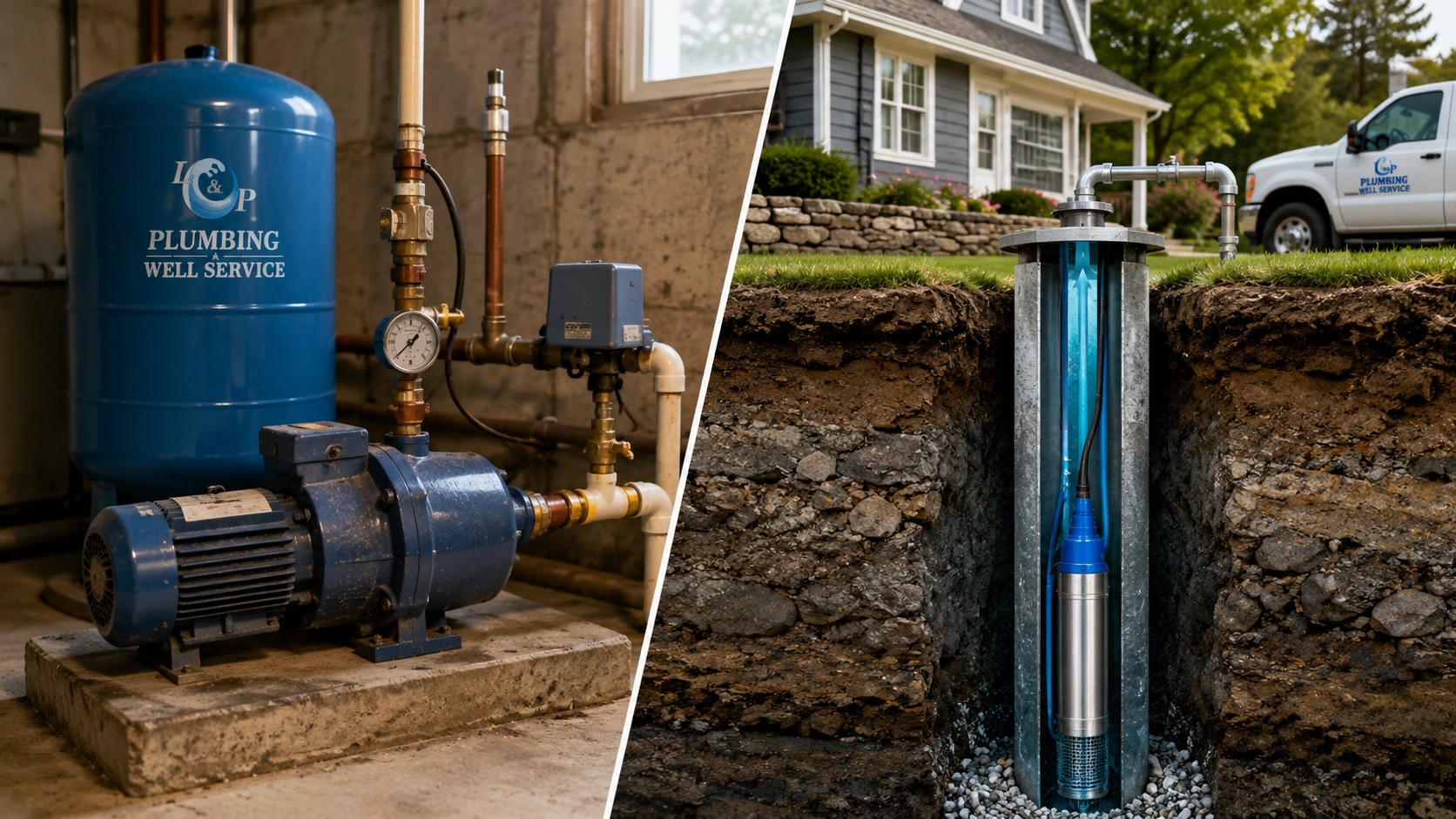
A shallow well jet pump is generally appropriate when the pumping water level stays within about 25 feet of the pump. A submersible pump sits below the water level inside the well and is better suited to deeper drilled wells. For many Connecticut homes, submersible systems provide quieter operation, stronger deep-well performance, and less exposure to freezing. The correct choice depends on the pumping water level, well yield, required pressure, household demand, and total vertical lift, not the well depth alone.
Older homes across Watertown, Wolcott, Torrington, and Litchfield County may still rely on an above-ground jet pump installed in a basement, utility room, or well enclosure. When that equipment fails, replacing it with the same type may appear to be the simplest option.
However, an aging jet pump system may also create an opportunity to upgrade. At L&P Plumbing & Well Service, we evaluate the complete well system before recommending a repair, direct replacement, or conversion to a modern submersible pump.
How a Shallow Well Jet Pump Works
A jet pump sits outside the well. It creates suction in the water line, allowing atmospheric pressure to move water toward the pump before the unit sends it into the pressure tank and home.
Shallow well jet pumps are commonly used when the pumping water level is no more than about 25 feet below the pump. This measurement refers to the vertical distance to the water while the pump is operating, not necessarily the well’s total drilled depth. Franklin Electric rates its shallow well jet systems for lifts of up to 25 feet.
Advantages include:
- Easy access to the motor and controls
- Lower labor requirements for certain repairs
- Practical performance for genuinely shallow wells
- Straightforward replacement when the existing system is properly designed
A professional shallow well pump installation can remain a sensible choice when the well is shallow, the suction line is sound, and household demand is moderate.
How a Submersible Well Pump Works
A submersible pump is lowered into the well casing and positioned below the water level. Instead of drawing water upward through a long suction line, it pushes water through the drop pipe toward the pressure tank.
This configuration avoids the shallow-well suction limitation and allows properly selected units to handle substantial vertical lift. Residential submersible models are available in different flow and horsepower ranges because system requirements vary widely.
A submersible system commonly provides:
- Better suitability for deep drilled wells
- Reduced pump noise inside the home
- Fewer priming concerns
- More consistent performance at greater depths
- More available basement or utility-room space
Because the motor operates underground and underwater, submersible equipment generally produces less noticeable noise than an above-ground pump.
Submersible Well Pump vs. Jet Pump in Connecticut
Connecticut well conditions can vary significantly from one property to another. State well-completion reports record depth, yield, geology, and construction information, and state research notes that some bedrock areas produce very deep, low-yield wells.
That variation means two neighboring homes may need completely different pump systems.
A shallow jet pump may be appropriate when:
- The pumping water level remains within the pump’s suction range
- The pump is installed in a dry, protected location
- Existing piping is in good condition
- Current water pressure meets the household’s needs
- Easy above-ground service access is a priority
A submersible conversion may make more sense when:
- The water level is too deep for a shallow jet pump
- The jet pump frequently loses prime
- Pump noise travels through the basement
- Pressure drops during simultaneous water use
- The existing system is outdated or repeatedly failing
- More dependable deep-well performance is needed
Deep-well jet pumps also exist, so a well deeper than 25 feet does not automatically require a submersible unit. The existing well design and pumping level must be inspected before selecting equipment.
Why Submersible Pumps Perform Well During Connecticut Winters
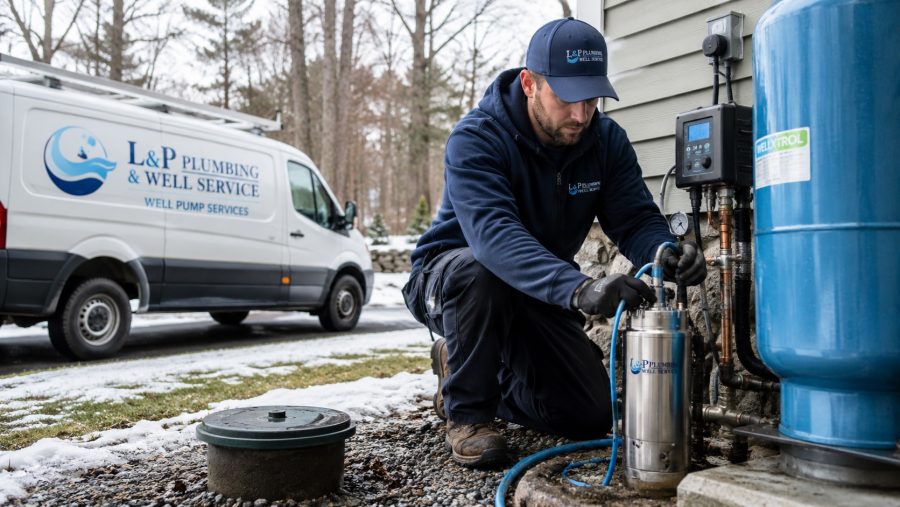
An above-ground jet pump, suction pipe, or pump enclosure can be vulnerable when exposed to freezing temperatures. A submersible pump remains below the water level inside the well, where the pump itself is protected from direct outdoor freezing conditions.
Connecticut guidance explains that a pitless adapter connects to the well casing below the frost line, helping protect the water line between the well and home from freezing.
This does not make the entire system freeze-proof. Above-ground pipes, pressure tanks, switches, and building penetrations must still be properly insulated and protected.
Why Well Depth Does Not Determine Horsepower by Itself
The best deep well submersible pump is not automatically the unit with the largest motor.
Proper sizing considers:
- Pumping water level
- Well recovery rate and yield
- Desired gallons per minute
- Pressure-switch settings
- Vertical lift to the home
- Pipe diameter and friction loss
- Number of fixtures and occupants
The pump must overcome total dynamic head while still supplying the required flow and pressure. Installing an oversized pump can contribute to short cycling when the pressure tank and controls are not matched correctly.
Our well water tank services include pressure-tank and switch evaluation because the pump, tank, controls, and piping must operate as one balanced system.
Should an Old Jet Pump Be Converted?
A conversion may involve more than replacing the motor. Work can include new electrical wiring, drop pipe, safety cable, controls, well-cap components, a pitless connection, and pressure-tank adjustments.
Before recommending a conversion, we inspect the well information, current water level, flow, electrical supply, piping, tank condition, and existing pump failure. Our well pump replacement service covers both jet and submersible systems, while our well pump repair service helps determine whether replacement is actually necessary.
Well Pump Installers in Connecticut
L&P Plumbing & Well Service provides well pump installation, repair, replacement, maintenance, pressure-tank service, filtration, and water treatment throughout Watertown and surrounding communities, including Wolcott and Torrington.
Homeowners searching for experienced well pump installers in Connecticut can contact our team for a complete system assessment. We match the pump to the well rather than forcing every property into the same equipment package.
Frequently Asked Questions
Is a submersible pump always better than a jet pump?
No. A properly installed jet pump can serve a shallow well effectively. Submersible systems become more advantageous as pumping depth, pressure demand, and performance requirements increase.
Can a jet pump be replaced with a submersible pump?
Often, yes. The well casing, electrical supply, piping, pressure tank, water level, and overall system condition must first be evaluated.
What causes a jet pump to lose prime?
Possible causes include suction-line leaks, a failing foot valve, low well water, damaged fittings, or air entering the system.
Does a deeper well always require more horsepower?
No. Pump selection depends on total dynamic head, desired flow, pressure, pipe friction, and pumping water level. Well depth is only one part of the calculation.