

Sand in well water commonly results from damaged well screens, deteriorating casing, improper pump placement, excessive pumping, or sediment disturbed during well work. Sand can damage a well pump by wearing down impellers and other moving components, reducing pressure, and shortening equipment life. A sediment filter can protect household plumbing, but the underlying well problem must be diagnosed to prevent further pump damage.
Why Is There Sand in My Well Water?
Finding gritty particles in a bathtub, toilet tank, or kitchen faucet can indicate a problem somewhere in the well water system.
At L&P Plumbing & Well Service, we help Connecticut homeowners diagnose water quality concerns, pump problems, and pressure issues before they become expensive repairs.
Some sediment appears temporarily after well maintenance. However, persistent or increasing sand in well water can signal deteriorating components or changing groundwater conditions.
Understanding the cause helps determine whether the solution involves well rehabilitation, pump adjustments, or filtration.
5 Common Causes of Sediment in Well Water
1. Damaged or Deteriorating Well Screen
Well screens allow groundwater to enter while helping prevent sand and gravel from entering the well.
Over time, corrosion, damage, or oversized openings can allow sediment through.
Common warning signs include:
- Increasing sand in household water
- Grit collecting in toilet tanks
- Repeatedly clogged faucet aerators
- Sediment returning after filter changes
Not every bedrock well has a screen, so proper diagnosis should account for the actual well construction.
2. Well Pump Positioned Too Close to Sediment
Sand and other particles can accumulate near the bottom of a well.
When a pump intake sits too close to deposited material, sediment may enter the pumping system.
A qualified technician can evaluate pump placement and determine whether repositioning is appropriate.
3. Excessive Pumping or Low Well Yield
When a pump removes water faster than the well can replenish it, the pumping water level drops.
Under certain conditions, excessive drawdown can mobilize fine particles and allow sediment into the system.
This may become more noticeable during:
- Extended irrigation
- Heavy household water use
- Dry summer periods
- Declining groundwater levels
We recommend testing well recovery and pump performance before changing equipment.
4. Deteriorating Well Casing
The well casing helps maintain structural stability and prevent unwanted material from entering the borehole.
Cracks, corrosion, or damaged connections can allow sediment into the water supply.
If sandy water appears suddenly alongside discoloration or changes in water quality, professional inspection is important.
5. Recent Well or Plumbing Work
Sediment sometimes appears after drilling, pump replacement, well rehabilitation, or plumbing repairs.
Disturbed particles may temporarily enter the water.
However, persistent sediment should not automatically be considered normal. Continued sand production may indicate inadequate well development or another underlying issue.
Can Sand in Well Water Damage Your Pump?
Yes. Sand is abrasive and can gradually damage pump components, particularly when sediment exposure continues over time.
According to Penn State Extension’s Water Well Maintenance and Rehabilitation guide, abrasive sediment is a major cause of water well pump deterioration.
Potential damage includes:
| Component | Potential Problem |
|---|---|
| Pump impellers | Abrasive wear and reduced pumping efficiency |
| Pump internal components | Accelerated mechanical deterioration |
| Pressure controls | Sediment accumulation or restricted sensing passages |
| Pipes and valves | Buildup, restriction, and wear |
| Household fixtures | Clogged aerators and reduced water flow |
Sand-related wear can contribute to lower pressure, longer pump operation, and eventual equipment failure.
Our well pump repair services in Watertown, CT help homeowners identify whether sediment has damaged the pump or whether another system component needs attention.
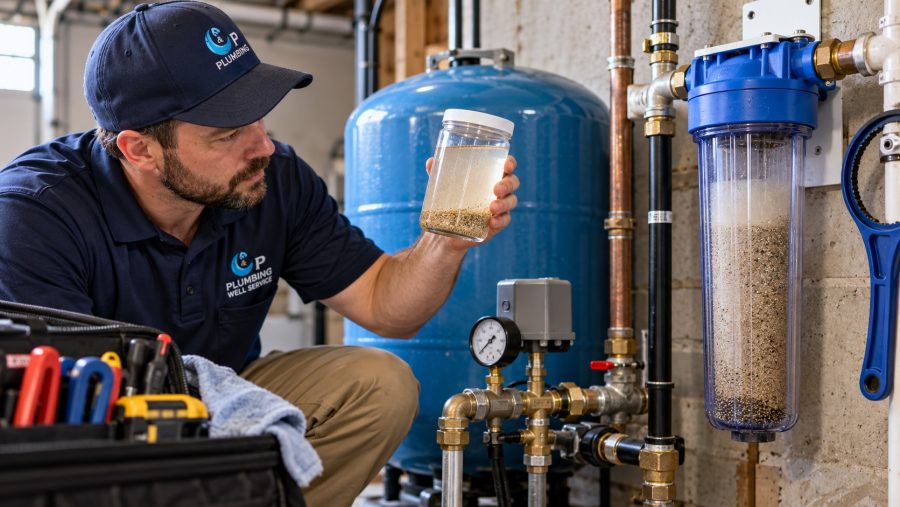
Sand Coming From Faucet: Is It Always a Well Problem?
Not necessarily.
Sediment appearing at one faucet may originate from that fixture, its aerator, or nearby plumbing.
When sand appears at multiple cold-water fixtures, the source may be farther upstream.
Other materials can also resemble sand, including rust, mineral scale, and iron or manganese particles.
A simple comparison can help:
- One faucet affected: Check for localized fixture or piping problems.
- Multiple cold-water faucets affected: Investigate the incoming water supply and filtration.
- Only hot water affected: Consider water heater sediment or internal component deterioration.
- Sand after heavy water use: Evaluate well yield, pump placement, and drawdown.
These observations help narrow the problem but do not replace professional testing.
How to Remove Sand From Well Water
Step 1: Identify the Sediment Source
We recommend inspecting water pressure, pump operation, well condition, and sediment characteristics.
When the water changes suddenly, especially after flooding or casing damage, arrange appropriate drinking water testing before assuming the supply remains safe.
Step 2: Repair the Underlying Well Problem
Depending on the diagnosis, solutions may include:
- Repairing or rehabilitating damaged well components
- Correcting pump placement
- Addressing excessive pumping rates
- Evaluating low-yield conditions
- Replacing severely worn equipment
The correct repair depends on the well construction and source of sediment.
Step 3: Install Appropriate Sediment Filtration
A whole-house sediment filter can capture particles before they reach faucets, appliances, and downstream water treatment equipment.
Common options include spin-down filters, sediment cartridges, and backwashing filtration systems.
However, filters installed after the well pump cannot prevent sand from entering and damaging the pump itself.
For additional guidance, read our related article, Sizing a Well Water Sediment Filter: Micron Ratings Explained.
Frequently Asked Questions
Is sand in well water normal?
Small amounts may temporarily appear after drilling or maintenance. Persistent or increasing sand should be investigated because it can indicate well or pump problems.
Can sediment in well water ruin a submersible pump?
Yes. Abrasive particles can wear internal pump components, reducing efficiency and potentially causing premature failure.
Will a sediment filter stop sand from damaging my well pump?
Not when installed downstream of the pump. Such filters protect household plumbing but cannot prevent sediment from passing through the pump.
Should the well pump be replaced if sand appears?
Not automatically. We recommend inspecting the well, pump performance, and sediment source before determining whether repair or replacement is necessary.
Protect Your Well Pump With L&P Plumbing & Well Service
Sand in well water should never be ignored when it persists or appears alongside pressure problems.
At L&P Plumbing & Well Service, we help homeowners throughout Watertown, Litchfield County, and surrounding Connecticut communities diagnose well pump problems, sediment concerns, and water filtration needs.
From pump inspections to water treatment solutions, our team focuses on identifying the cause and recommending practical repairs.
Finding sand in your faucets or concerned about well pump sediment? Contact us now!