
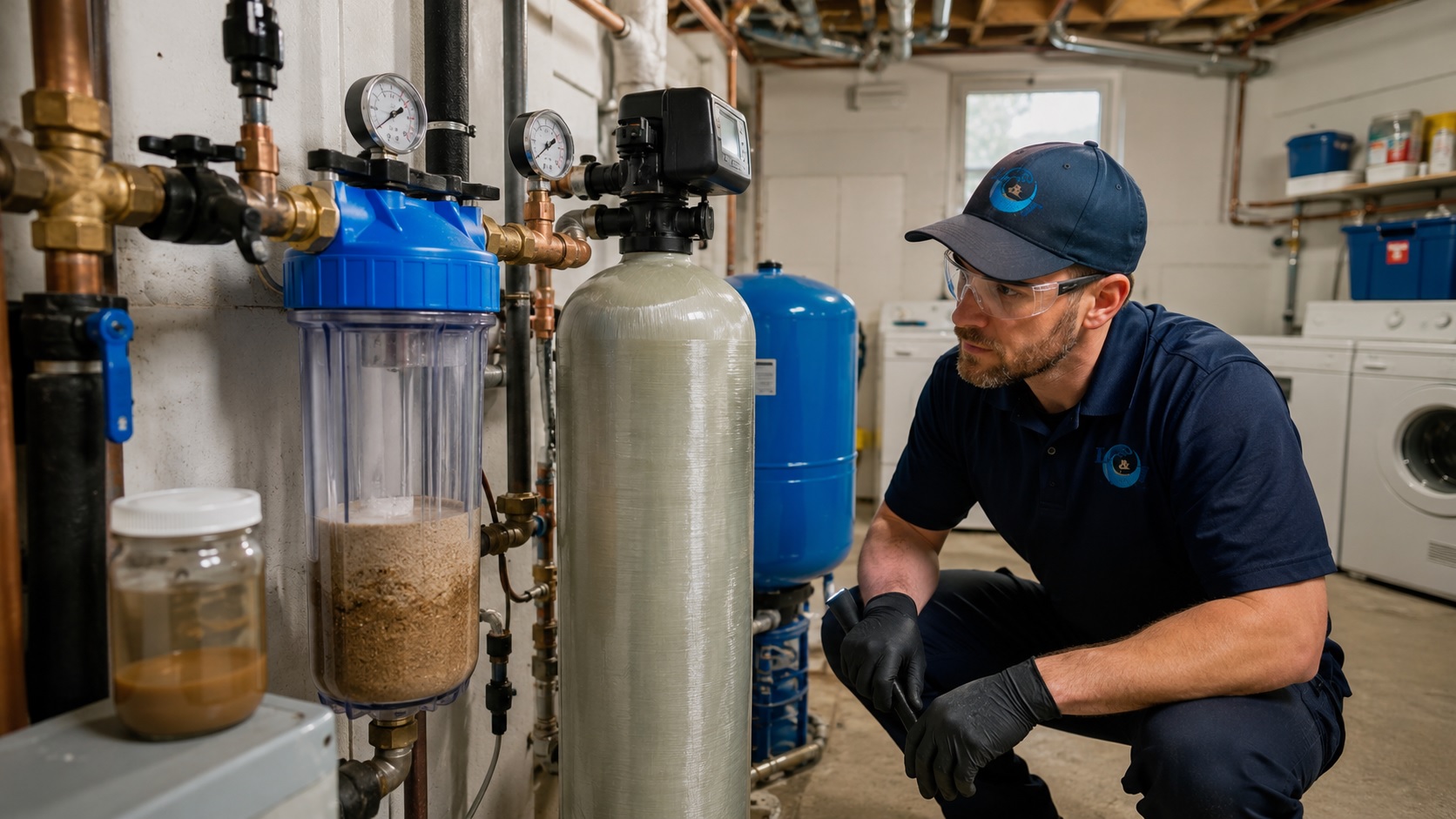
Heavy sediment in well water can turn a normal day into a plumbing headache. Faucets lose pressure, showerheads clog, washing machine screens collect grit, toilets refill slowly, and clear water can suddenly look cloudy after heavy rain or well disturbance.
For Litchfield County homeowners, the fix is not always as simple as adding the smallest filter available. A well water sediment filter has to be sized around the home’s actual water flow, sediment load, particle size, pressure tank performance, and treatment goals.
At L&P Plumbing & Well Service, we help homeowners choose water treatment equipment that protects plumbing without choking flow. Our team works on well water systems, city water plumbing, pumps, pressure tanks, water filtration, and whole-home plumbing concerns throughout Watertown and surrounding Connecticut towns.
What a Sediment Filter Actually Does
A sediment filter removes physical particles from water. That can include sand, silt, rust, dirt, clay, and other suspended matter that travels from the well, pressure tank, piping, or older plumbing materials.
Sediment filtration is usually the first stage of a water filtration system because it protects downstream equipment. It can help extend the life of softeners, carbon filters, neutralizers, fixtures, appliances, and valves. It does not remove dissolved contaminants, so water testing and proper system design still matter.
That matters because “dirty water” can have different causes:
- Coarse sand from the well
- Fine silt after heavy rain
- Rust from older piping
- Scale from plumbing
- Iron particles
- Manganese particles
- Disturbed sediment after pump work
- Turbidity from well conditions
A proper well water treatment CT plan starts with knowing what needs to be removed.
Start With Testing Before Sizing Equipment
Before choosing a micron rating, homeowners should understand the water quality problem. Connecticut DPH notes that private well owners are responsible for their own drinking water quality, and testing is the best way to know whether water is safe or affected by nuisance impurities. CT DPH also recommends checking with the local health department for area-specific concerns.
For sediment problems, a useful review can include:
- Visual sediment check
- Pressure test
- Flow rate check
- Water clarity and turbidity review
- Iron and manganese testing
- pH testing
- Hardness testing
- Bacteria testing when needed
- Inspection of the pressure tank and pump cycle
- Review of when sediment appears, such as after rain, high use, or pump cycling
A filter should not be selected by guesswork. The right setup depends on the type of sediment, how much water the home uses, and whether the filter needs to protect a single fixture or the whole house.
What Micron Ratings Mean
A micron rating describes the approximate particle size a filter is designed to capture. One micron is extremely small. The lower the micron number, the finer the filtration.
In simple terms:
- 100 to 150 microns: coarse sand and larger grit
- 50 microns: visible sediment, sand, larger rust flakes
- 20 microns: smaller sand, rust, and heavier suspended particles
- 10 microns: finer sediment and silt
- 5 microns: fine silt and smaller suspended particles
- 1 micron: very fine particles, usually used only when needed
A smaller micron number catches finer particles, but it can also create more pressure drop and require more maintenance. Larger micron ratings usually allow better flow and are better suited for visible dirt and sediment.
That is why the best well water sediment filter is not always the finest one. For a home with heavy sediment in well water, starting too fine can clog the system quickly and reduce pressure at showers, laundry, and kitchen fixtures.
Why Flow Rate Matters
Every home has a water demand pattern. A small ranch with two people does not use water the same way as a larger home with multiple bathrooms, irrigation, laundry, dishwasher cycles, and frequent showers.
A filter has to keep up with peak demand. If it cannot, the homeowner may notice:
- Weak shower pressure
- Slow tub filling
- Poor washing machine performance
- Pressure drop when two fixtures run
- Frequent filter clogging
- Shorter cartridge life
- Strain on downstream treatment equipment
L&P Plumbing & Well Service already treats pump capacity, pressure tank performance, and pressure concerns as part of well system work. Our well pump installation guidance explains that pump sizing, well depth, pump capacity, and pressure tank performance all affect water pressure throughout the home.
That same thinking applies to sediment filtration. A filter is part of the whole well water system, not a stand-alone part.
Spin-Down Screen Filters: Best for Coarse Sediment
A spin-down sediment filter is usually installed near the point where well water enters the home. Water enters the filter body, particles collect against a screen, and heavier material settles toward the bottom. The homeowner or technician can flush the collected sediment through a drain valve.
Spin-down filters are useful when the water contains larger particles such as sand, grit, and visible debris. Pentair describes spin-down sediment and sand filters as reusable systems with no cartridge replacements needed, designed to filter sediment 152 microns or larger, with filter life varying based on sediment concentration.
A spin-down filter can be a good fit when:
- Sand appears in fixtures
- Large particles are visible
- The home needs a first-stage prefilter
- Cartridge filters clog too quickly
- The well produces periodic bursts of grit
- A simple flushable design makes sense
- The goal is to protect downstream equipment
But a spin-down filter is not always enough. It may not catch fine silt, clay, or smaller suspended particles. For many Litchfield County homes, it works best as the first stage before another filter.
Cartridge Sediment Filters: Useful, But Not Always Enough
Cartridge filters are common because they are simple and affordable. Water passes through a replaceable cartridge, and sediment is trapped in the filter material.
They can work well for moderate sediment, but heavy sediment can overwhelm them. When that happens, cartridges clog quickly and water pressure drops.
Cartridge filters may be used for:
- 20 micron sediment reduction
- 10 micron polishing
- 5 micron fine sediment capture
- Protection before a water softener or other treatment
- Smaller homes with manageable sediment load
The downside is maintenance. If a home has heavy sediment in well water, frequent cartridge changes can become frustrating and expensive.
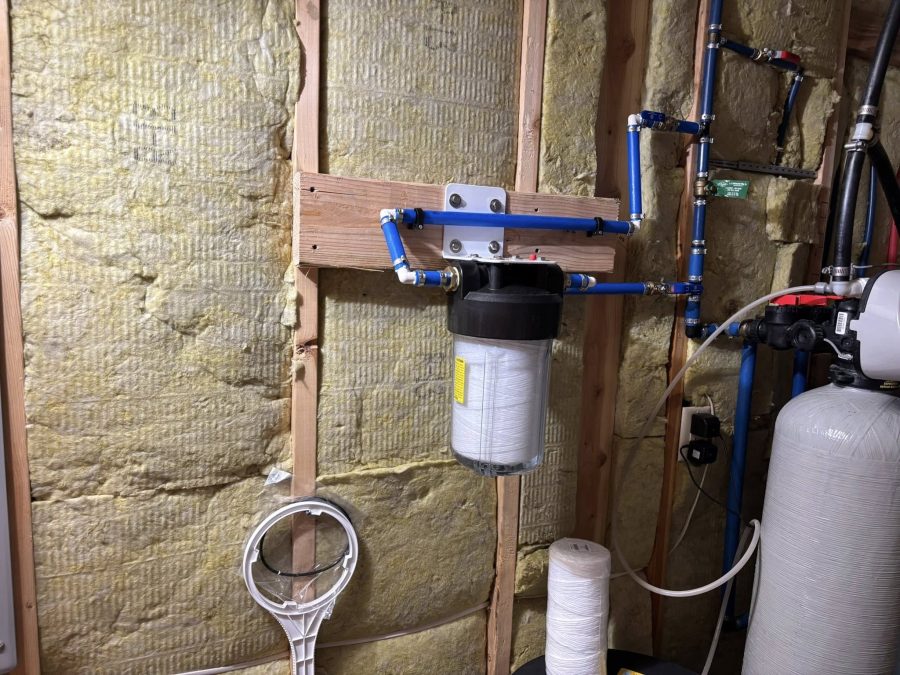
Backwashing Sediment Filter: Better for Heavy Sediment Loads
A backwashing sediment filter uses a media tank and control valve instead of a small cartridge. During normal operation, water flows through the media bed, where sediment is trapped. During the backwash cycle, the system reverses flow and flushes collected sediment out to a drain.
This type of system is often better for homes with heavier sediment because it can clean itself automatically on a schedule or based on usage. Backwashing sediment systems commonly use a tank, media, backwash control valve, and bypass valve, with timed backwash settings available by flow or day of week depending on the system.
A backwashing sediment filter can be a better choice when:
- Sediment load is high
- Cartridges clog too often
- Water flow needs to stay strong
- The home has multiple bathrooms
- The homeowner wants lower hands-on maintenance
- Fine particles are passing through a basic screen
- The system needs to protect other treatment equipment
For many homeowners, this is the difference between simply filtering water and building a water filtration system installation that works with real household demand.
Spin-Down Filter vs Backwashing Media Tank
Both systems can be useful, but they solve different problems.
| Filter Type | Best For | Main Benefit | Main Limitation |
|---|---|---|---|
| Spin-down screen filter | Sand, grit, coarse particles | Flushable and reusable | May miss fine sediment |
| Cartridge filter | Light to moderate sediment | Simple and affordable | Can clog fast under heavy load |
| Backwashing sediment filter | Heavy sediment and whole-home flow | Automatic cleaning and better capacity | Needs proper sizing, drain access, and setup |
The smartest setup may combine stages. A spin-down filter can catch the larger grit first. A backwashing sediment filter or cartridge stage can handle smaller particles after that.
Do Not Strangle the Home’s Water Flow
A common mistake is choosing a fine filter first because finer sounds better. That can backfire.
If a 5 micron cartridge is installed as the first line of defense against heavy sediment, it may clog fast. Once it clogs, the whole home feels the restriction. The result can be weak showers, poor appliance performance, and repeated filter changes.
A better approach often starts coarse, then gets finer only when needed.
For example:
- Heavy sand: start with a spin-down screen
- Sand plus fine silt: add a second sediment stage
- Fine suspended particles: consider a properly sized backwashing media tank
- Rust or iron particles: test for iron and confirm treatment type
- Ongoing pressure issues: check pump and pressure tank performance
Where the Filter Should Be Installed
A whole-house sediment filter is usually installed after the pressure tank and before most downstream treatment equipment. That position helps protect the rest of the plumbing system.
A typical order may look like this:
- Well pump
- Pressure tank
- Main shutoff and pressure gauge
- Sediment prefilter
- Backwashing sediment filter or second-stage filter
- Water softener, neutralizer, carbon, or other treatment
- Home plumbing distribution
Every home can be different. Pipe layout, space, drain access, flow rate, service clearance, bypass needs, and existing equipment all affect the final installation plan.
Signs Your Current Filter Is Undersized
A filter may be technically working but still undersized for the home.
Watch for:
- Pressure drops after a few days
- Frequent cartridge changes
- Dirty water after high usage
- Sediment returning after filter replacement
- Clogged faucet aerators
- Sand in toilet tanks
- Washing machine inlet screen buildup
- Sediment in water heater drains
- Reduced flow when multiple fixtures run
- Filter housing packed with grit
These signs suggest the home may need a different micron rating, larger filter housing, staged filtration, or a backwashing sediment filter.
Litchfield County Well Water Conditions Require Local Judgment
Litchfield County homes often rely on private wells, and water conditions can change from one property to the next. A home in Watertown may have different sediment behavior than a home in Litchfield, Thomaston, Harwinton, Bethlehem, Woodbury, Goshen, Morris, or Torrington.
That is why local well water treatment CT work should be based on testing, inspection, and actual water use rather than a one-size-fits-all filter.
L&P Plumbing & Well Service provides plumbing, well service, filtration, and water treatment support for local Connecticut homeowners, including service pages for areas such as Harwinton and Torrington.
How We Size Sediment Filtration
When we look at a well water sediment filter setup, we focus on practical performance.
That includes:
- Current water pressure
- Pump and pressure tank behavior
- Number of bathrooms
- Household water demand
- Pipe size
- Sediment type
- Sediment volume
- Existing filtration equipment
- Water test results
- Maintenance expectations
- Available drain connection for backwashing
- Space for service access
- Protection needs for appliances and fixtures
A properly sized system should make water cleaner without making the home feel starved for flow.
When Sediment Points to a Larger Well Problem
Sometimes sediment is not just a filter problem. It can signal an issue with the well, pump, tank, or plumbing.
Call for professional help when sediment appears with:
- Sudden loss of water
- Rapid pressure cycling
- Pump short cycling
- Muddy water after heavy rain
- Air sputtering at faucets
- Water pressure that rises and falls
- Rust-colored water
- Sand appearing after pump replacement
- Recurring clogged filters
- No-water emergencies
L&P Plumbing & Well Service handles well pump repair, pressure tanks, submersible pumps, jet pumps, pressure switches, and full well water systems.
For homeowners dealing with sudden no-water concerns, our related guide on well pump troubleshooting is a helpful next step from the L&P blog.
Filter Finer Only After Flow Is Protected
Sediment filtration should protect the home, not punish it with poor pressure.
The right micron rating depends on what the well produces and how the household uses water. Coarse sediment often needs a spin-down screen first. Heavy sediment may need an automatic backwashing sediment filter. Fine particles may require a second stage after the larger debris is controlled.
At L&P Plumbing & Well Service, we help Litchfield County homeowners choose water filtration system installation options that match real water conditions, flow needs, and long-term maintenance expectations.
For help with heavy sediment in well water, backwashing sediment filter options, well water treatment CT planning, or a whole-home well water sediment filter, reach out to our local team for practical guidance and professional installation.
FAQs
What micron sediment filter is best for well water?
The best micron rating depends on the sediment size and flow needs. Coarse sand may need a 50 to 150 micron prefilter, while finer silt may need 20, 10, or 5 micron filtration after larger particles are controlled.
Is a smaller micron filter always better?
No. A smaller micron filter catches finer particles, but it can clog faster and reduce water flow. For heavy sediment, start with a coarse stage before moving to finer filtration.
What is a spin-down sediment filter?
A spin-down sediment filter is a flushable screen filter used to capture larger particles such as sand and grit before they enter the rest of the plumbing system.
When should a homeowner choose a backwashing sediment filter?
A backwashing sediment filter is useful when sediment load is heavy, cartridges clog often, or the home needs whole-house filtration without frequent manual filter changes.
Can sediment filters remove iron or manganese?
A basic sediment filter can catch some particles, but dissolved iron or manganese usually needs specific water treatment. Testing should guide the system design.
Where should a sediment filter go in a well system?
A whole-house sediment filter is commonly installed after the pressure tank and before water softeners, neutralizers, carbon filters, and household fixtures.