
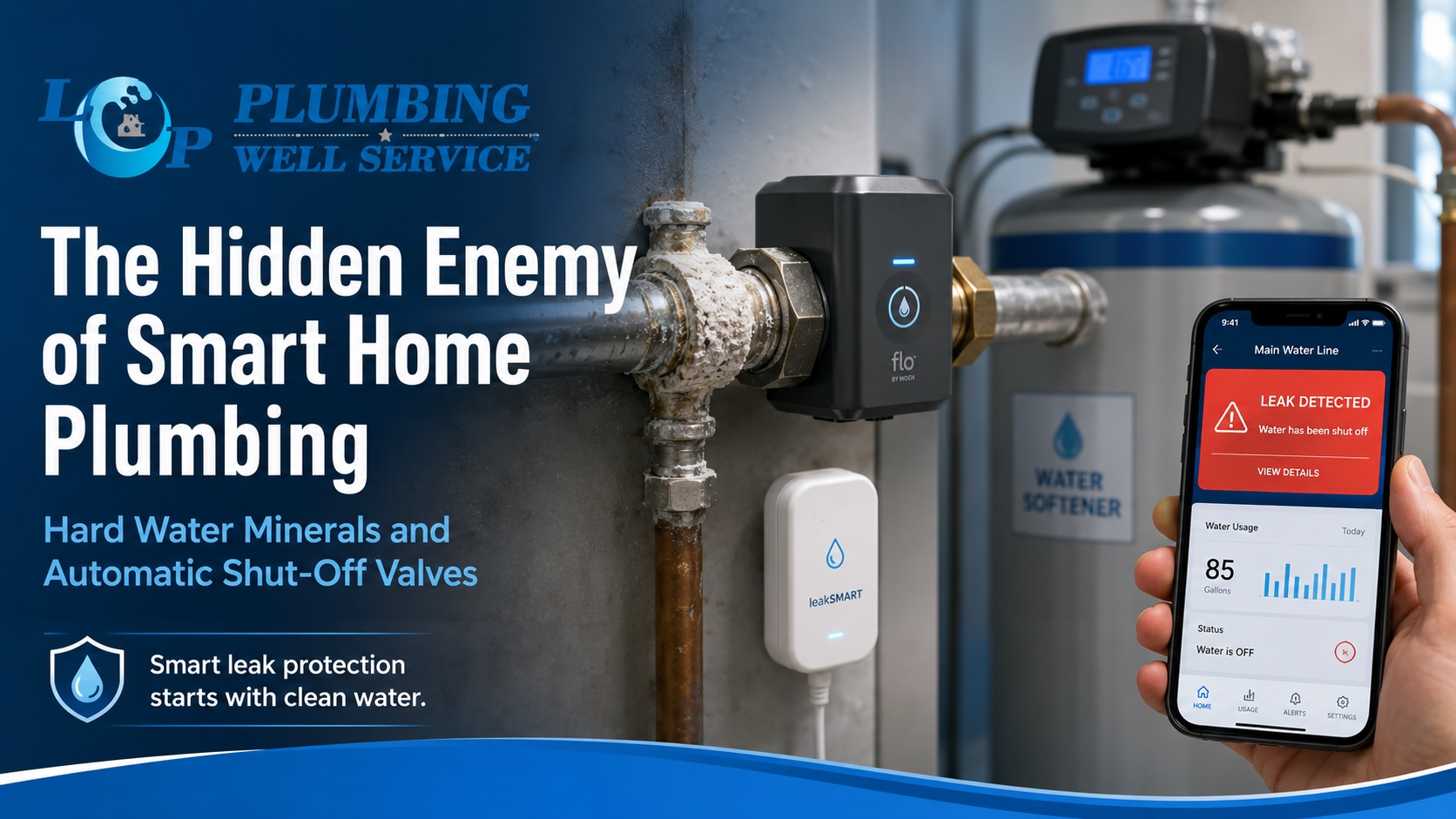
Smart plumbing technology can protect a home before a small leak turns into major water damage. An automatic water shut off valve can monitor water use, detect unusual flow, send alerts, and close the main water supply when a serious leak appears.
That sounds simple. The hidden problem starts inside the water.
Across many Connecticut homes, hard water minerals can create scale inside fixtures, valves, water heaters, and plumbing components. When a homeowner adds a smart plumbing system without also addressing hardness, minerals can create friction, buildup, and valve movement problems over time.
At L&P Plumbing & Well Service, our team helps Watertown, Litchfield County, and nearby CT homeowners protect plumbing systems from both sudden leaks and long-term water quality problems. Smart leak protection works best when paired with the right plumbing layout, clean shut-off access, and proper well water treatment or well water filtration when needed.
Why Smart Shut-Off Valves Matter
A traditional main shut-off valve only works when someone knows where it is and can reach it fast. That is helpful during a burst pipe, failed water heater, or major fixture leak, but only when someone is home.
Smart shut-off systems change that.
Devices such as Moen Flo and Phyn are designed to monitor water activity and shut off water automatically when a leak or abnormal water event is detected. Moen notes that its smart water valve can automatically close when a leak is detected, while Phyn describes whole-property water monitoring and automatic shutoff through a single installed device.
That level of protection can be valuable for:
- Vacation homes
- Finished basements
- Older CT homes
- Well water systems
- Homes with water heaters on upper floors
- Rental properties
- Homes with aging pipes
- Properties with past leak damage
For homeowners searching leak detection system cost, the real question should not only be device price. The better question is whether the plumbing system is ready for smart leak defense.
How an Automatic Water Shut Off Valve Works
Most smart shut-off systems are installed on the main water line. Once installed, the device monitors the home’s water use and looks for unusual patterns.
A smart valve may track:
- Flow rate
- Pressure changes
- Water use duration
- Sudden high-volume flow
- Small continuous leaks
- Temperature changes
- Daily usage patterns
When the system detects a major issue, it can send an app alert and close the water supply automatically. Some systems also allow remote shut-off from a phone.
This is helpful because water damage often happens when no one is watching. A cracked supply line, failed washing machine hose, running toilet, leaking water heater, or burst pipe can release water for hours unless the main valve closes fast.
The Hard Water Problem Inside Smart Plumbing Systems
Hard water contains dissolved minerals, mainly calcium and magnesium. Nebraska Extension explains that calcium and magnesium are the two most common minerals that make water hard. The U.S. Department of Energy also notes that water softeners reduce hardness by removing minerals such as calcium, iron, and magnesium, helping prevent mineral deposits and scale buildup.
Those minerals are not just a cosmetic issue. Over time, scale can form inside plumbing parts.
Hard water buildup can affect:
- Shut-off valves
- Faucet cartridges
- Shower valves
- Water heater components
- Appliance connections
- Pressure switches
- Small internal ports
- Smart valve mechanisms
- Flow sensors
- Filter housings
With a manual valve, mineral buildup may make the handle stiff. With an automatic shut-off valve, buildup can interfere with the internal movement that allows the valve to open and close on demand.
Why Scale Can Hurt Automatic Valves
Smart water shut-off systems rely on precise internal components. When water quality is poor, small deposits can collect where clean movement matters most.
Hard water scale may cause:
- Slower valve movement
- Sticking or binding
- Incomplete shut-off
- Reduced flow accuracy
- Higher strain on motorized parts
- False alerts from unusual pressure behavior
- Shortened component life
- Service issues after long periods without valve exercise
That does not mean every home needs the same setup. It means water quality should be tested before adding smart plumbing technology, especially in homes with well water, visible scale, cloudy fixtures, white crust on faucets, or repeated water heater sediment issues.
Smart Plumbing System Plus Water Treatment: The Better Pairing
A smart leak detection device protects against sudden water events. A whole house water softener or water treatment system helps protect the plumbing environment the device lives in.
That pairing can be especially useful for CT homes with:
- Well water
- Hard water stains
- Scale buildup on fixtures
- Water heater sediment
- Low or inconsistent water pressure
- Frequent cartridge or valve problems
- Mineral buildup around shut-offs
- Past leaks or pipe repairs
When to Consider Hard Water Treatment CT Homeowners Can Trust
A water softener or treatment system should be considered before or during smart valve installation when these signs appear:
- White crust on faucets or showerheads
- Spots on glasses or dishes
- Dry-feeling water after showers
- Stiff shut-off valves
- Sediment in water heater maintenance
- Scale around plumbing fixtures
- Reduced hot water flow
- Frequent appliance issues
- Well water with mineral concerns
- Prior plumbing valve failures
For well water homes, testing matters. Water quality can vary from one property to the next. A home in Watertown may have different needs than a home in Litchfield, Woodbury, Thomaston, Wolcott, Bethlehem, Harwinton, Middlebury, New Hartford, or Goshen.
That is why a one-size-fits-all answer does not work. The best system depends on water hardness, iron, sediment, pH, pressure, pipe layout, and how the home uses water.
Leak Detection System Cost: What Affects the Project?
The cost of a leak detection system depends on more than the smart device.
Key cost factors include:
- Main water line access
- Pipe material
- Valve size
- Existing shut-off condition
- Need for new isolation valves
- Electrical outlet access
- Wi-Fi strength near the install area
- Pressure concerns
- Water treatment needs
- Well system layout
- Code requirements
- Testing and setup time
A low device price can become less valuable when installed on a hard-water system with old shut-offs, poor pressure, or no water treatment plan. A better installation looks at the full plumbing system first.
Why Manual Shut-Off Access Still Matters
Smart systems are helpful, but manual shut-off access still matters. Power, internet connection, app access, and device condition can all affect emergency response.
A complete leak defense setup should include:
- A working main shut-off valve
- Clear access to the valve
- Proper labeling
- Smart automatic shut-off when suitable
- Water quality testing
- Water softener or treatment when needed
- Annual plumbing checkups
- Pressure tank and well system inspection where applicable
Best Placement for a Smart Shut-Off Valve
Most automatic shut-off valves are installed close to where the main water supply enters the home. For city water, that may be near the meter or main shut-off. For well water, placement may depend on the pressure tank, filtration equipment, softener, bypass valves, and service access.
A proper setup should allow:
- Easy service access
- A bypass when needed
- Protection for the whole home
- Correct flow direction
- Clear shut-off labeling
- Compatibility with treatment equipment
- Safe connection to existing plumbing
For well water homes, the relationship between the pressure tank, pump controls, and treatment equipment should be reviewed before installation.
Do Smart Valves Replace Plumbing Maintenance?
No. A smart valve can reduce damage from certain leaks, but it does not replace plumbing maintenance.
A complete protection plan includes:
- Checking old supply lines
- Replacing worn shut-off valves
- Inspecting water heaters
- Maintaining sump pumps
- Testing well pump performance
- Servicing pressure tanks
- Treating hard water
- Reviewing visible pipe corrosion
- Checking water pressure
- Repairing small leaks early
CT Homes Need Smart Protection and Better Water Quality
Smart plumbing systems are becoming more common because homeowners want faster leak alerts and better protection. That is a smart move, especially for homes with finished basements, older plumbing, well systems, and high-value interiors.
But the smartest setup does not ignore water quality.
Hard water minerals can create scale, friction, and buildup inside the same components that smart leak systems depend on. When water treatment and smart shut-off technology work together, the home gets stronger protection from both sudden leaks and slow mineral damage.
For hard water treatment CT, automatic shut-off valve installation, water filtration, well service, or whole-home plumbing support, contact L&P Plumbing & Well Service. Our local team helps Watertown and surrounding CT homeowners build safer, cleaner, more dependable plumbing systems.
FAQs
What is an automatic water shut off valve?
An automatic water shut off valve is a smart plumbing device installed on the main water line. It monitors water use and can close the water supply when a leak or unusual flow pattern is detected.
Can hard water damage a smart plumbing system?
Hard water minerals can create scale inside plumbing parts. Over time, buildup may affect valves, sensors, fixtures, water heaters, and other components that rely on clean movement and accurate flow.
Should a water softener be installed with a smart shut-off valve?
A water softener should be considered when the home has hard water, mineral stains, stiff valves, fixture scale, or well water issues. Testing the water first helps determine whether softening or another treatment system is needed.
How much does a leak detection system cost?
Leak detection system cost depends on device type, pipe access, valve size, plumbing layout, electrical access, Wi-Fi setup, and whether water treatment or valve upgrades are needed.
Who handles hard water treatment CT homeowners can trust?
L&P Plumbing & Well Service provides well water treatment, filtration, plumbing, and well system services for Watertown, Litchfield County, and nearby Connecticut communities.