
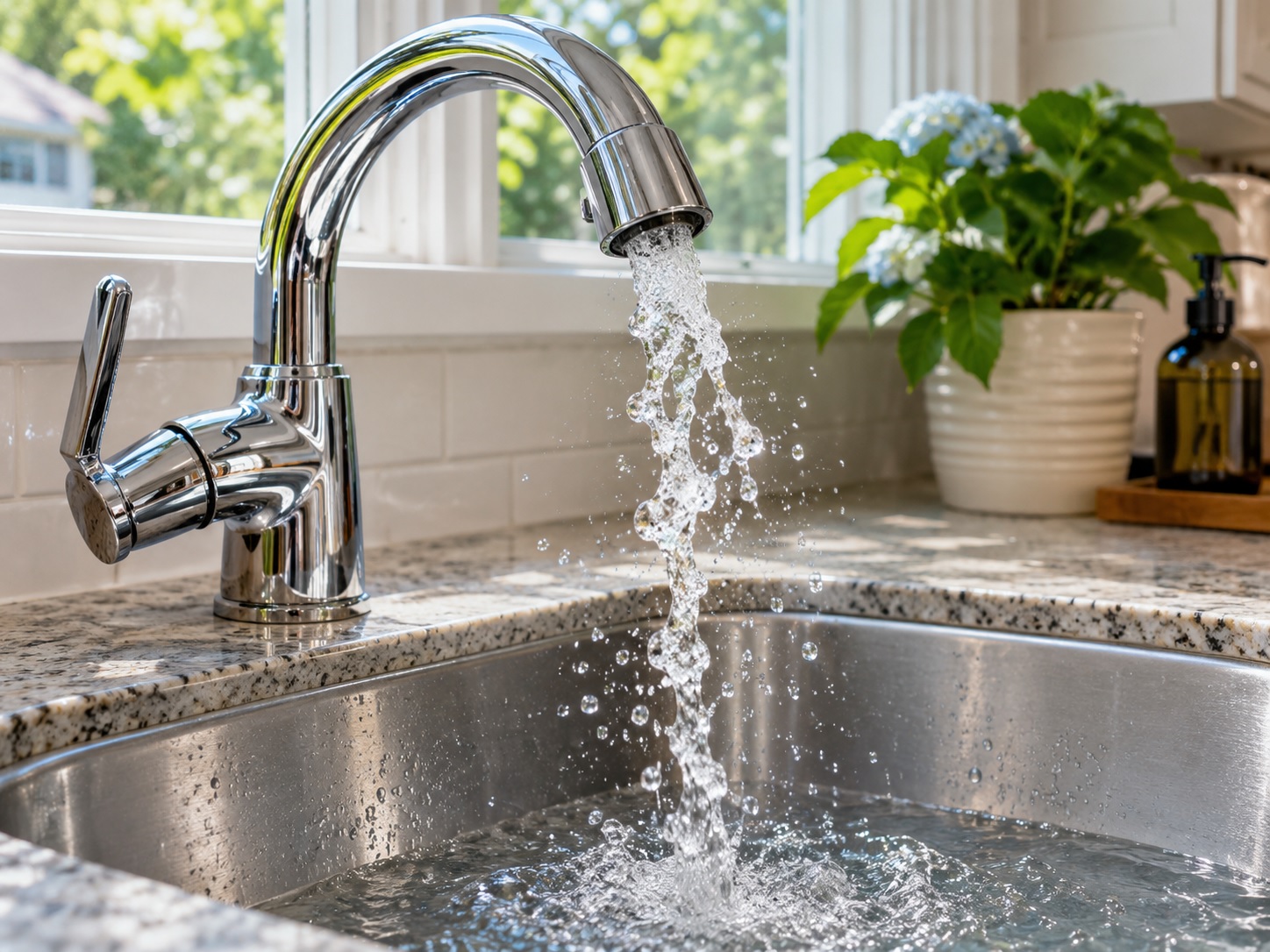
A faucet sputtering air usually indicates trapped air in the water lines, a temporary water supply interruption, or a problem with the plumbing or well system. In homes using city water, sputtering often follows water main repairs, plumbing maintenance, or pressure changes. For private well systems, recurring air may indicate a low water level, leaking well piping, pump problems, or pressure system issues. Temporary sputtering may clear naturally, but persistent air in water lines requires professional evaluation.
Why Is My Faucet Sputtering Air?
Does your kitchen faucet spit air before releasing a steady stream of water? Does your shower hiss, splash, or produce inconsistent water pressure?
At L&P Plumbing & Well Service, we help homeowners throughout Watertown and Litchfield County diagnose plumbing and private well problems.
Air entering water lines can interrupt normal flow and cause faucets to sputter, hiss, or release water unevenly.
However, the underlying cause depends heavily on whether your home receives municipal water or uses a private well.
Our recommendation is to identify your water supply type and determine whether the sputtering happens occasionally or repeatedly.
Why Faucets Sputter on City Water
Municipal water systems deliver pressurized water through underground distribution pipes.
Several situations can temporarily introduce air into those pipes.
1. Water Main Repairs or Maintenance
When utility workers repair water mains, flush hydrants, or restore service after an interruption, air can enter the distribution system.
Once water pressure returns, trapped air may travel through household plumbing and escape through faucets.
This often resolves after normal water use.
2. Recent Plumbing Repairs
Replacing a faucet, repairing a pipe, or installing a water heater may require temporarily shutting off the water supply.
When the pipes refill, trapped air can cause brief sputtering.
We recommend allowing the affected cold-water faucets to run gently until the flow stabilizes, provided the utility has issued no special flushing instructions.
3. Dissolved Air in Municipal Water
Sometimes water appears milky or cloudy because tiny air bubbles are released as pressure decreases.
According to Connecticut Water, this phenomenon is particularly noticeable during colder months and does not generally indicate a water quality problem.
If cloudiness disappears after the water sits in a clear glass, dissolved air is a likely explanation.
Persistent discoloration, unusual odors, or water quality advisories should be investigated separately.
Why Faucets Spit Air in Homes With Well Water
Private well systems operate differently from municipal water supplies.
A well pump draws groundwater into the home, while pressure equipment regulates delivery.
Persistent sputtering may indicate a problem within this system.
1. Low Well Water Levels
During drought or heavy water usage, a well may struggle to replenish water quickly enough.
If the water level drops near the pump intake, air may enter the system.
Common symptoms include:
- Sputtering after long showers
- Reduced water pressure
- Intermittent water flow
- Air bubbles after heavy water usage
The Connecticut Department of Energy and Environmental Protection identifies air bubbles, frequent pump operation, and interrupted water service as potential signs of insufficient well water supply.
2. Leaking Well Pump or Suction Lines
Damaged well piping, loose fittings, or suction-side leaks can allow air to enter certain pump systems.
A jet pump may draw air through leaking suction connections.
Submersible systems can also experience air-related symptoms from low water levels or damaged components.
We recommend professional inspection rather than repeatedly restarting a struggling pump.
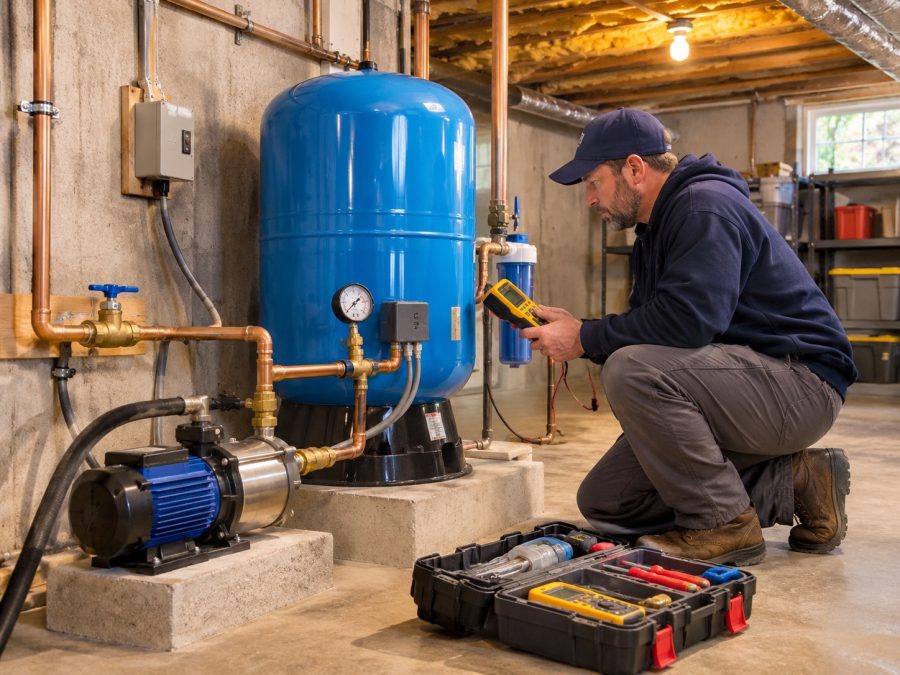
3. Well Pressure Tank Problems
A pressure tank helps regulate household water pressure and reduces unnecessary pump cycling.
When the tank loses its proper air charge or develops an internal problem, homeowners may notice pressure fluctuations and rapid pump cycling.
These issues can occur alongside sputtering faucets, although a failing tank does not necessarily introduce air directly into the water.
We recommend checking the complete pressure system before replacing components.
4. Dissolved Gases in Groundwater
Not all bubbles originate from an air leak.
Some groundwater naturally contains dissolved gases.
In uncommon circumstances, methane or other gases can cause persistent bubbling or sputtering.
Methane is flammable and requires specialized testing and appropriate gas management.
If gas accumulation is suspected, avoid ignition sources, leave any potentially hazardous enclosed area, and seek professional assistance.
City Water vs. Well Water: Common Causes
| Symptom | City Water | Well Water |
|---|---|---|
| Sputtering after water interruption | Trapped air from maintenance | Pump restart or drained lines |
| Air after heavy water usage | Less typical | Low well yield or pump intake issue |
| Fluctuating water pressure | Supply or plumbing problem | Pump or pressure system problem |
| Milky water that clears | Dissolved air | Dissolved air or other gases |
| Persistent sputtering | Plumbing or utility issue | Well piping, pump, or groundwater issue |
How to Fix a Faucet Sputtering Air
We recommend beginning with several simple observations.
Step 1: Check Multiple Faucets
Determine whether the problem affects one fixture or the entire home.
One affected faucet may indicate a localized fixture or aerator problem.
Step 2: Check Hot and Cold Water
If only hot water sputters, the water heater or hot-water plumbing may require inspection.
Step 3: Review Recent Water Interruptions
For municipal water, check whether the utility recently performed maintenance.
Step 4: Monitor Well Pump Operation
For private wells, note whether the pump cycles rapidly, runs continuously, or loses pressure.
Step 5: Schedule Professional Diagnosis
If sputtering continues, avoid replacing equipment without identifying the cause.
Our well pump repair services in Watertown, CT cover pump problems, pressure tanks, electrical controls, and water supply troubleshooting.
When Should You Call a Plumber?
Occasional sputtering after a known water interruption may resolve without repairs.
However, we recommend professional attention when:
- Air repeatedly returns after the lines clear.
- Water pressure drops unexpectedly.
- The well pump runs continuously or short cycles.
- Faucets release air alongside sand or sediment.
- Water flow stops intermittently.
- Multiple fixtures develop the same problem.
For related information, read our guide, Why Is My Well Pump Short Cycling? How to Protect Your Pressure Tank.
Frequently Asked Questions
Is air coming from a faucet dangerous?
Ordinary trapped air is generally harmless. However, persistent bubbles in private well water may require testing to distinguish air from other dissolved gases.
Will air in water lines go away naturally?
Temporary trapped air following plumbing repairs or utility maintenance often clears with normal water use.
Can a bad well pump cause sputtering faucets?
Yes. Low water levels, damaged pump components, and certain piping leaks can introduce air into a well water system.
Why does only my hot water faucet sputter?
Air or dissolved gas may be associated with the water heater or hot-water piping. Persistent symptoms require further investigation.
Stop Faucet Sputtering With L&P Plumbing & Well Service
A faucet sputtering air may be a temporary inconvenience or an early warning of a larger plumbing problem.
At L&P Plumbing & Well Service, we provide plumbing repairs, well pump troubleshooting, pressure tank services, and complete water system solutions throughout Watertown and surrounding Litchfield County communities.
With more than 25 years of local experience, owners Sean and Jerry personally handle our plumbing and well service projects.
Whether your home uses municipal water or a private well, we’ll help identify the source of the problem and recommend an appropriate repair.