
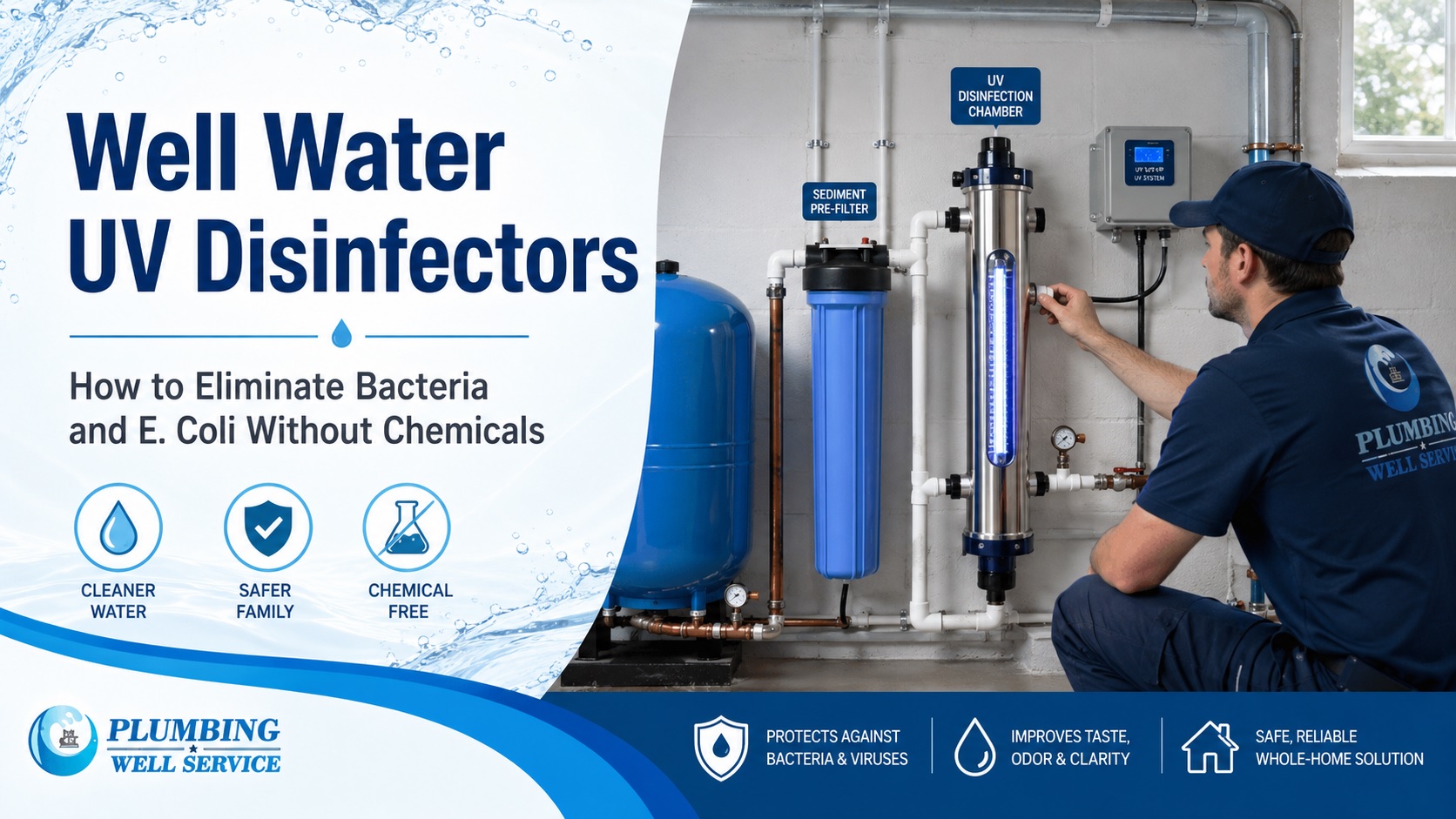
A properly sized UV water purifier for well water uses ultraviolet light to inactivate bacteria, viruses, and parasites as water passes through the treatment chamber. UV does not add chemicals or normally change water taste or odor. However, a positive E. coli result requires immediate safe-water precautions, identification of the contamination source, treatment of the well and plumbing, and laboratory retesting. A sediment pre-filter is essential because suspended particles can shield microorganisms from UV exposure.
Clear water is not always safe water. Bacteria can enter a private well after flooding, septic failure, damaged well components, surface runoff, or work performed on the pump and casing without creating a visible color, taste, or odor.
At L&P Plumbing & Well Service, we help homeowners across Watertown, Woodbury, Torrington, Bethlehem, and surrounding Connecticut communities identify well water concerns and install treatment based on laboratory results.
How UV Well Water Treatment Works
A whole-house UV system is normally installed where well water enters the home. Water flows through a stainless-steel chamber containing a UV lamp protected by a clear quartz sleeve.
The lamp exposes microorganisms to ultraviolet radiation that damages their genetic material. The organisms are inactivated, which prevents them from reproducing and causing infection. UV treatment can address bacteria, viruses, and certain parasites when the system provides the required UV dose at the actual household flow rate.
Unlike routine chlorine treatment, UV does not add a disinfectant to the water. That means there is normally no chemical taste or odor. It also means there is no residual disinfectant continuing through the home’s plumbing after water leaves the chamber.
Can UV Eliminate E. Coli in Well Water?
Homeowners researching how to eliminate E. coli in well water should begin with a certified laboratory test and guidance from the local health department.
When E. coli is detected, do not continue drinking untreated well water. CDC guidance recommends using bottled water or another safe source until the contamination has been addressed and follow-up testing confirms that the water is safe.
A permanent UV system can provide ongoing protection, but installation alone may not correct the original problem. The well may also need:
- Inspection of the cap and casing
- Correction of surface drainage
- Repair of damaged well components
- One-time disinfection of the well and plumbing
- Flushing of the distribution system
- Repeat bacteria testing
UV treats water as it passes through the chamber. It does not disinfect contaminated pipes, remove existing biofilm, or repair a well that continues admitting polluted surface water.
Why Sediment Filtration Must Come Before UV
A UV lamp can only disinfect what the light can reach. Sand, silt, rust, iron particles, and cloudy water can absorb or block UV radiation. Microorganisms may also hide behind suspended particles, creating a shadowing effect that reduces treatment performance. EPA technical guidance identifies turbidity and suspended solids as factors that can interfere with UV disinfection, while CDC notes that UV systems perform better with pre-filtration.
A typical treatment sequence may include:
- Well pump and pressure tank
- Coarse sediment or spin-down filter
- Fine sediment cartridge
- Iron, manganese, hardness, or pH treatment when needed
- UV disinfection chamber
- Household plumbing
Our guide to sizing a well water sediment filter explains why filter micron rating and household flow must be evaluated together.
Choosing the Right UV Water Purifier for Well Water
A whole-house UV system should be selected according to peak flow, not average daily water use. A unit that cannot deliver the required UV dose while several fixtures are operating may leave water undertreated.
We review:
- Peak gallons per minute
- Number of bathrooms and occupants
- Water clarity and turbidity
- Sediment levels
- Iron and manganese
- Hardness and scale potential
- Existing treatment equipment
- Available service space
- Electrical and bypass requirements
For water that may be microbiologically unsafe, ask whether the proposed equipment has appropriate third-party certification. NSF/ANSI 55 distinguishes Class A systems designed for disinfection of contaminated water from Class B systems designed to reduce nuisance bacteria in water already considered safe.
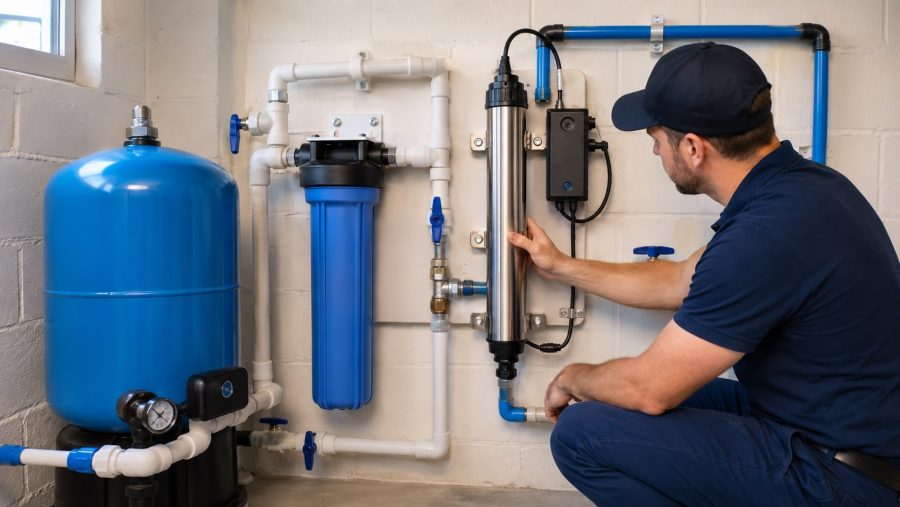
UV Filter for Well Water Maintenance
A UV disinfector requires regular maintenance even when the water looks normal.
Replace the UV Lamp
UV lamps gradually lose germicidal output while continuing to produce visible light. Many residential manufacturers require replacement every year to maintain the rated disinfection performance.
Clean the Quartz Sleeve
The quartz sleeve can develop mineral scale, iron staining, or cloudy deposits that block UV transmission. Manufacturer guidance commonly calls for inspection and cleaning at least annually, with more frequent service when water contains hardness, iron, or manganese.
Replace Sediment Cartridges
A clogged pre-filter reduces household pressure and may allow water quality to deteriorate. Cartridge frequency depends on sediment load, filter size, water use, and well conditions.
Our well water filtration services include filter changes, system cleaning, UV lamp replacement, bacteria testing, pressure checks, and treatment-system maintenance.
What Does a Well Water UV Light Cost?
Well water UV light cost depends on the required flow rate, certification level, controller features, monitoring equipment, existing plumbing, electrical access, and necessary pre-treatment.
The full project may include:
- UV chamber and controller
- Sediment pre-filter
- Bypass and shutoff valves
- Electrical work
- Plumbing modifications
- Initial system disinfection
- Replacement lamp
- Filter cartridges
- Quartz sleeve cleaning or replacement
A less expensive unit can become a poor value when it is undersized or installed without adequate pre-filtration. We build the estimate around the water test and the home’s actual demand.
Request a Well Water Quality Evaluation
UV treatment addresses microorganisms, but it does not remove arsenic, uranium, nitrates, hardness, iron, sediment, or other chemical and mineral concerns. Testing determines whether the home needs UV alone or a coordinated well water treatment system.
Contact L&P Plumbing & Well Service to request a well water quality test and UV installation evaluation in Watertown or surrounding Litchfield County communities.