
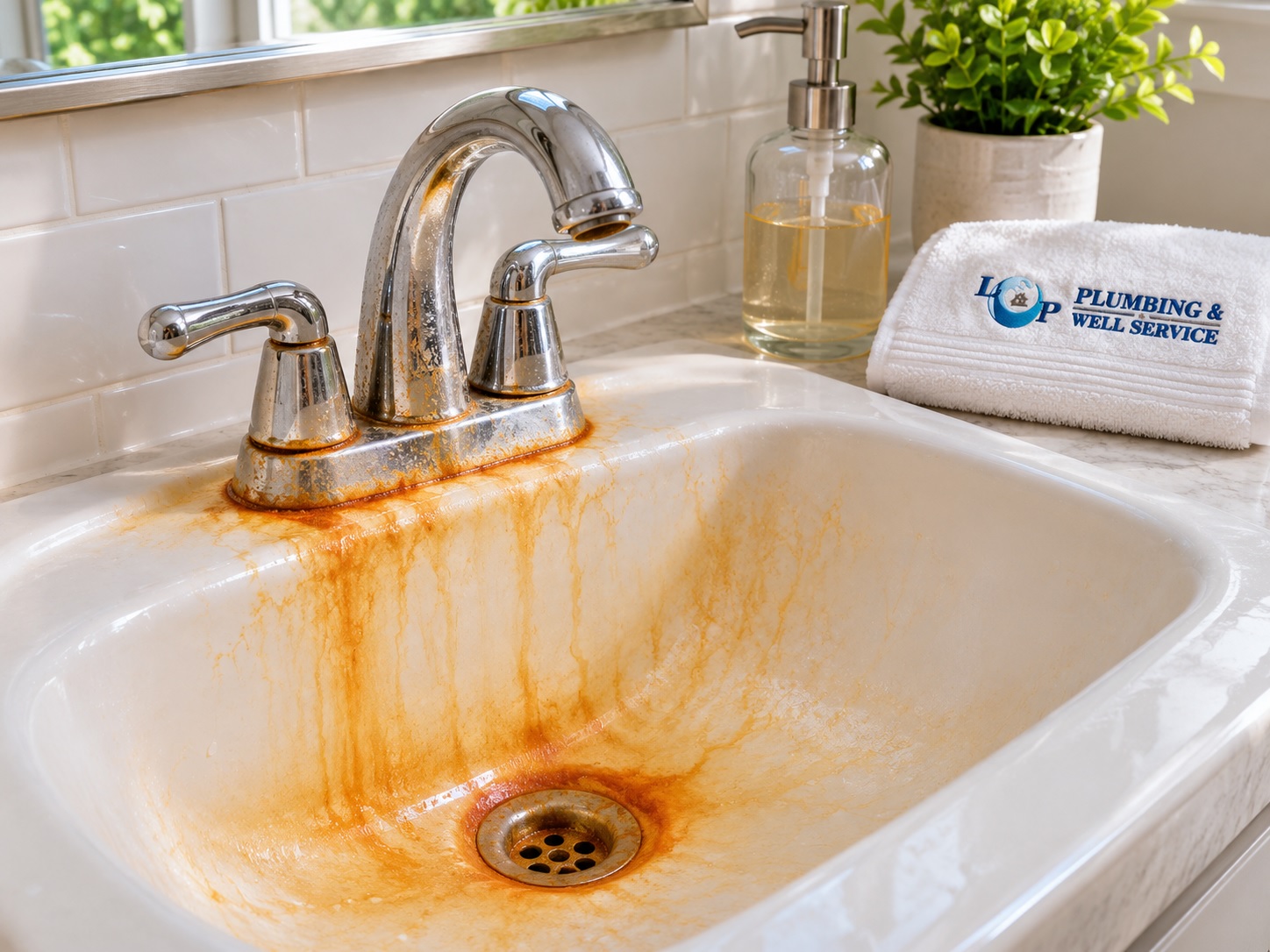
Iron in well water causes orange, reddish-brown, or rusty stains when dissolved iron reacts with oxygen and forms solid particles. The most effective way to prevent orange stains from well water is to test the water for iron, manganese, pH, and other relevant conditions, then install a properly sized whole-house iron removal system. Depending on the results, treatment may include an oxidizing iron filter, a backwashing filtration system, or a compatible water softener. Removing iron before it reaches household fixtures helps prevent recurring stains and sediment buildup.
Why Does Well Water Leave Orange Stains?
Orange stains around sinks, toilets, showers, and laundry fixtures are common complaints among homeowners using private wells.
At L&P Plumbing & Well Service, we help homeowners throughout Watertown and Litchfield County identify water quality problems and select appropriate treatment systems.
Iron naturally occurs in underground rock and soil. As groundwater moves through these materials, it can dissolve iron and carry it into private wells.
When dissolved iron comes into contact with oxygen, it can form reddish-brown particles that collect on plumbing surfaces.
Cleaning the stains may improve their appearance, but removing excess iron from the incoming water is the better long-term solution.
3 Types of Iron Problems in Well Water
Understanding the type of iron problem is essential before choosing a filtration system.
1. Ferrous Iron: Clear Water That Turns Orange
Ferrous iron is dissolved in groundwater and may be invisible when water first leaves the faucet.
After exposure to oxygen, the iron oxidizes and forms orange or brown particles.
Common signs include clear water that turns cloudy after sitting and stains that develop around drains or inside toilet bowls.
2. Ferric Iron: Visible Rust-Colored Particles
Ferric iron has already oxidized into solid particles.
Water may appear yellow, orange, or reddish-brown immediately after leaving the faucet.
These particles can collect in faucet aerators, filters, and plumbing fixtures.
3. Iron Bacteria: Orange Slime and Deposits
Iron bacteria are microorganisms that use iron in their environment and produce slimy deposits.
Common warning signs include:
- Orange or brown slime inside toilet tanks
- Musty or swampy odors
- Sticky buildup around fixtures
- Repeated clogging of filters or plumbing components
Iron bacteria often require additional cleaning or disinfection measures beyond ordinary iron filtration.
How Much Iron in Well Water Is Too Much?
The U.S. Environmental Protection Agency establishes a secondary drinking water guideline of 0.3 milligrams per liter (mg/L) for iron.
This guideline primarily addresses appearance, staining, sediment, and unpleasant taste rather than defining a health-based safety limit.
According to Penn State Extension’s Iron and Manganese in Private Water Systems, treatment selection should depend on the concentration and chemical form of iron present.
We recommend laboratory testing rather than selecting equipment based solely on stain color.
A complete evaluation may include iron, manganese, pH, water hardness, and relevant bacteria testing.
Private well owners should also continue routine drinking water safety testing because clear-looking or iron-treated water is not necessarily free from other contaminants.
Best Ways to Remove Iron From Well Water
The appropriate treatment depends on water chemistry, iron concentration, and household water demand.
| Treatment System | Best Application |
|---|---|
| Sediment filter | Captures existing rust particles |
| Oxidizing iron filter | Treats dissolved and oxidized iron under suitable conditions |
| Backwashing iron filtration | Removes accumulated iron particles through automatic cleaning |
| Water softener | May handle limited dissolved iron when equipment specifications permit |
| Oxidation followed by filtration | Useful for higher iron concentrations or complex water conditions |
| Professional iron bacteria treatment | Addresses bacterial slime and associated buildup |
Whole-House Iron Filters
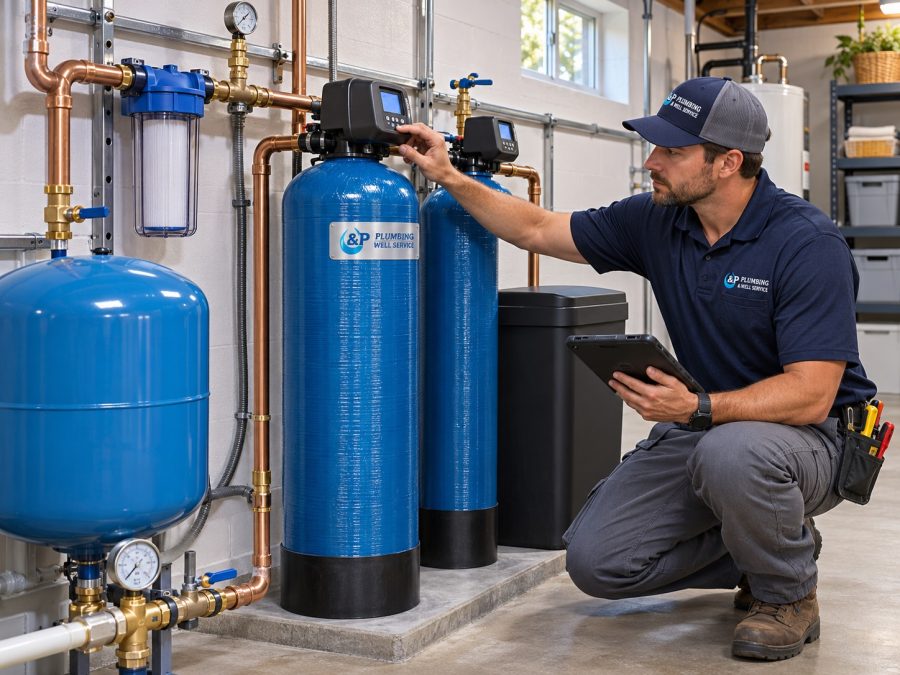
For homes with persistent rusty water stains, a whole-house iron filter is often an effective solution.
These systems are installed near the incoming water supply so treatment occurs before water reaches sinks, showers, toilets, and appliances.
Some systems use oxidation to convert dissolved iron into particles that can be filtered out.
Others use specialized filtration media and automatic backwashing cycles.
We recommend matching the equipment to the actual water test results.
Can a Water Softener Remove Iron?
Certain water softeners can remove limited amounts of dissolved iron.
However, softeners are primarily designed to reduce hardness minerals.
Excessive iron or existing rust particles can foul the resin and reduce performance.
A dedicated iron removal system may be more appropriate when iron concentrations are elevated.
Why a Basic Sediment Filter May Not Stop Orange Stains
Sediment cartridges can trap rust particles already present in the water.
However, they cannot reliably remove dissolved ferrous iron.
When clear water containing dissolved iron passes through a basic sediment filter, staining may still develop later as the iron oxidizes.
For more information, read our related article, Sizing a Well Water Sediment Filter: Micron Ratings Explained.
How to Prevent Iron Stains From Returning
We recommend following these steps:
- Test the well water. Identify iron concentration, manganese, pH, and related treatment requirements.
- Choose the correct filtration system. Select equipment compatible with the water chemistry and household flow rate.
- Install whole-house treatment. Remove iron before water reaches household fixtures.
- Maintain filtration equipment. Follow manufacturer recommendations for backwashing, media replacement, and servicing.
- Clean existing stains. Use fixture-safe rust removers according to product instructions.
- Retest treated water. Confirm that the installed system is reducing iron effectively.
Avoid mixing cleaning chemicals, especially bleach with acidic rust-removal products.
Frequently Asked Questions
Is iron in well water harmful?
Iron is generally considered an aesthetic water quality concern at ordinary drinking water concentrations. However, comprehensive well testing is important because other contaminants may be present.
What is the best filter for orange well water stains?
A properly selected whole-house oxidizing or backwashing iron filter is often effective. The best option depends on iron concentration, pH, and other water conditions.
Will a sediment filter remove dissolved iron?
No. Ordinary sediment filters capture particles but generally cannot remove iron that remains dissolved in water.
Why does clear well water turn orange after sitting?
Dissolved ferrous iron reacts with oxygen and forms reddish-brown particles, making the water appear rusty.
Does boiling well water remove iron?
No. Boiling is not a reliable method of removing dissolved iron and may concentrate dissolved minerals as water evaporates.
Stop Orange Well Water Stains With L&P Plumbing & Well Service
Recurring rusty water stains are more than a cleaning frustration. They can indicate excess iron that affects fixtures, filtration equipment, and household plumbing.
At L&P Plumbing & Well Service, we provide professional well water treatment, iron filtration, water softeners, and whole-house filtration systems throughout Watertown and surrounding Litchfield County communities.
With more than 25 years of local experience, owners Sean and Jerry personally handle our plumbing and well service projects.
Explore our well water filtration services in Watertown, CT to learn how we address iron staining and other water quality concerns.